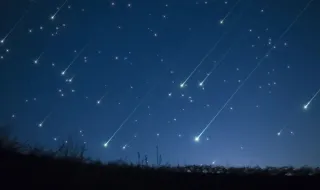
The Northern Taurid meteor shower reaches its peak on November 12. The shower is not among the most prolific, but it is known for its ability to produce exceptionally bright fireballs that can outshine Venus.
Under ideal conditions, around five meteors per hour are expected. NASA describes the Taurids’ activity as “about five meteors per hour under ideal conditions.” The Northern Taurids are active approximately from October 20 to December 10, and their maximum is not sharply limited to just one night.
The shower takes its name from the constellation Taurus, from which the meteors appear to originate. Taurus can be located more easily using the constellation Orion, then directing your gaze northeast toward the red star Aldebaran, which lies in the “eye” of the celestial bull.
Observers, however, should not focus solely on Taurus. Meteors can appear in any part of the night sky, so it is better to scan the neighboring constellations as well. The best chance comes on a clear night, far from streetlights and city lights. The intervals between individual meteors may be long, but the appearance of a bright bolide can make the wait worthwhile.
Taurid particles enter Earth’s atmosphere at an altitude of around 66 kilometers. They move relatively slowly - at about 27 kilometers per second, or approximately 104,000 kilometers per hour. For comparison, meteors from the Perseid shower reach around 59 kilometers per second.
The shower is associated with comet 2P/Encke. It was discovered by French astronomer Pierre Méchain on January 17, 1786, but bears the name of German astronomer Johann Franz Encke, who calculated its orbit. The comet orbits the Sun every approximately 3.3 years - the shortest orbital period among known comets.
During its passages through the inner Solar System, the comet leaves behind icy and rocky particles. When Earth passes through this stream of debris, the particles heat up and burn in the atmosphere, creating the streaks of light known as shooting stars.
Scientists from the Royal Observatory Greenwich suggest that comet Encke and the Taurids may be remnants of a much larger comet that broke apart between 20,000 and 30,000 years ago.