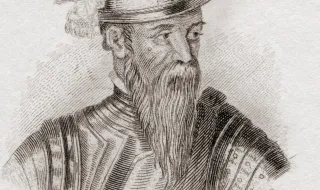
On November 14, 1533, the forces of Francisco Pizarro entered Cusco—the capital and religious center of the Inca state. The event became a decisive moment in the Spanish conquest of Peru, but it did not mean the immediate end of the resistance. The Spanish established control over the city, while in the following years the Incas organized new attempts to retake it.
The march toward Cusco followed a bitter civil war between Atahualpa and Huáscar—the sons of ruler Huayna Capac. Pizarro took advantage of the empire’s weakening and captured Atahualpa in Cajamarca in November 1532. The Incas handed over an enormous ransom in gold and silver, but the ruler was executed in July 1533. After his death, the Spanish set out for Cusco, accompanied by local allies and Manco Inca, whom they placed at the head of the Incas.
An Expedition with Few Men and Far-Reaching Consequences
Pizarro reached Peru with an expedition small for the scale of his task—around 180 men and nearly 30 horses. The claim that the Spanish king granted him permission for the expedition on January 20, 1531, does not correspond to the established chronology. The legal basis for the conquest was the Capitulations of Toledo, concluded with the Spanish crown in 1529; the voyage to Peru itself took place in 1531.
The first Spanish settlement in Peru was San Miguel de Tangarará, founded in 1532. Some popular reference works give the date as August 15, but reliable historical evidence does not unequivocally confirm that day. In any case, the settlement served as a base for the expedition into the country’s interior.
Cusco Remained Both an Inca City and a Spanish Colony
The Spanish entry into Cusco was not the city’s founding. Cusco had existed for centuries as the center of the Inca state. On March 23, 1534, Pizarro carried out the Spanish founding ceremony and gave it the name “The Most Noble and Great City of Cusco.” This act marked the beginning of the transformation of the Inca capital into a Spanish colonial city.
Pedro Sancho, Pizarro’s secretary, left one of the best-known early descriptions of the city: “Cusco is so large and beautiful that it would deserve admiration even in Spain.” He described stone palaces, straight paved streets, and water canals that ran through the city. The account shows that the conquerors did not encounter a small settlement, but a complex urban and political center.
There is no reliable historical evidence that the Incas accepted Pizarro as the “Creator of the World.” It is more likely that this claim is connected to the traditional significance of Cusco as the “navel,” or center, of the world in Inca beliefs, rather than to their attitude toward the Spanish conqueror. Spanish rule was not firmly established in 1533 either—in 1536, Manco Inca led a major uprising and laid siege to Cusco.
Sources: history.com, andina.pe