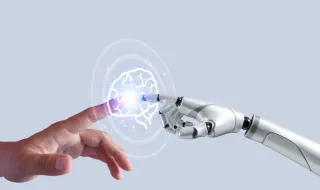
“Human” or "human" is Cambridge Dictionary’s Word of the Year. The choice is linked to the rapid development of artificial intelligence and the growing need to specify what has been created or carried out by a person.
The word is defined as “having the qualities, faults and feelings of people, as opposed to gods, animals or machines”. Cambridge Dictionary’s editor-in-chief, Colin McIntosh, explains that technological change has brought “human” back to the centre of conversations about creativity, thinking and identity. The development of artificial intelligence means that we now need to explicitly say “human” about things that once could only be done by people, he says.
"Human" is being used increasingly often
McIntosh’s research shows that the use of “human” has increased fourfold compared with 1900. In the past, the word “man” was more commonly used in a similar sense, but according to the editor, it is no longer acceptable when referring to both men and women.
“Human” entered Middle English in the 14th century from French. William Shakespeare also used it, but the word then remained relatively limited in its use for a long time.
The new technological environment has also led to the spread of compound expressions such as “human-made” and “human-driven”. They serve to distinguish human creations, qualities and skills from results generated or managed by artificial intelligence.
Examples of the word’s current use include actress Scarlett Johansson’s remarks about “an assault on human creativity”. Actor Matthew McConaughey, meanwhile, is defending his voice and likeness against unauthorised digital reproduction.
The issue of the boundary between humans and machines also appears in a statement by Microsoft co-founder Bill Gates. The measure of artificial intelligence’s success should be the extent to which it improves people’s lives, he says.
McIntosh points out that concerns about what people might lose if they outsource their thinking to artificial intelligence have changed attitudes towards the technology. The debate now involves both leading mathematicians and teachers of young children, while language reflects this change through the increasingly clear opposition between “human” and the machine.