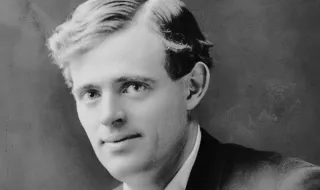
On the evening of November 21, 1916, Jack London left the dinner table at his ranch near Glen Ellen, California, after complaining of feeling extremely unwell. Several hours later, early in the morning of November 22, a servant found him unconscious in his room. His sister, Eliza Shepard, summoned doctors from Santa Rosa, but the writer never regained consciousness.
Around noon, he briefly improved. His condition then deteriorated again, and he died at 7:45 p.m. Jack London was 40 years old. Less than two months remained until his 41st birthday.
The Official Cause Was Kidney Disease
At first, doctors suspected food poisoning. Later, they diagnosed severe uremia — the buildup of toxic substances in the body caused by impaired kidney function. The death certificate listed „uremia following renal colic“, as well as chronic interstitial nephritis.
London’s health had been deteriorating gradually. In 1913, when he underwent surgery for appendicitis, doctors discovered serious kidney damage. They advised him to change his lifestyle, stop drinking alcohol and reduce his workload. London, however, continued working at an exhausting pace — writing, managing his ranch, engaging in agriculture and maintaining plans for new books and projects.
His final years were also marked by financial pressure. Beauty Ranch required funding, while the writer supported people close to him and continued writing to cover his expenses. Even after the fire that destroyed his nearly completed house, Wolf House, in 1913, he planned to rebuild it.
Suicide or Medical Crisis
Soon after his death, rumors began that London had used morphine, opium or heroin and had died from an intentional overdose. These theories were fueled by his known use of pain medication and accounts of his serious health problems.
Later, researchers examined some of his personal belongings, including glass vials and a leather medical case. Traces of opiates were found, but in combinations also characteristic of over-the-counter cough and cold medicines available at the time. The head of the study, Riketi, stated: „Our data rule out the suicide hypothesis.“ Other specialists, however, stressed that the presence of medication alone cannot establish whether a possible overdose would have been accidental or intentional.
What remains confirmed is what was recorded on the death certificate: renal colic, chronic kidney disease and uremia. The suicide theory has not been proven.
His Final Resting Place
London was cremated in Oakland. On November 26, his ashes were laid on a small hill at the ranch, near the graves of two children from a pioneer family. The writer himself had previously told his wife, Charmian, and his sister, Eliza: „I would have no objection to your laying my ashes on the hill where the Greenlaw children are buried and covering me with red stone from the ruins of the Big House.“
Ernest Hopkins’s obituary in the „San Francisco Bulletin“ summed up the shock of his death this way: „No writer, except perhaps Mark Twain, has led a more romantic life than Jack London.“ He left behind more than 50 books, hundreds of stories and characters that continue to connect literature with the sea, the wilderness and the struggle for survival.
Sources: smithsonianmag.com, oregonnews.uoregon.edu