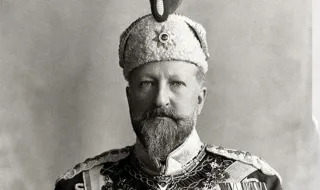
On November 28, 1898, Prince Ferdinand I officially opened the Sugar Factory in Sofia – an enterprise that was the largest industrial facility in Bulgaria at the time. The foundation stone was laid on May 31, 1897, and the factory was built with Belgian capital near the railway line to Kyustendil, outside the capital’s boundaries at the time.
The enterprise was owned by the Bulgarian Sugar Factories and Refineries company, whose principal shareholder was the group of Belgian industrialist Ernest Solvay. The complex covered an area of approximately 14,000 square meters and included 21 buildings, production facilities, warehouses, administrative sections and railway infrastructure. Large steam engines supplied from Belgium were installed there.
An enterprise with a complete production cycle
The Sugar Factory processed sugar beet and operated with a complete production cycle. Its designed capacity reached 7,000 tons of refined sugar per year, although in its strongest years actual production was around 5,000 tons. This represented approximately one-fifth of sugar consumption on the Bulgarian market. During the active season, the number of workers reached around 1,200, making the enterprise one of the largest employers in the country.
A workers’ community gradually took shape around the factory, followed later by the Sofia neighborhood of Sugar Factory. Its location next to a railway line was important for deliveries of beet from the Sofia region and other areas, as well as for shipping the finished product.
The end of production and the relocation of the equipment
After Bulgaria entered the First World War in 1916, the Belgian investors withdrew from the country. The factory continued operating for several more years, but production was discontinued in 1925. Historical studies cite the saturation of the market with new refineries, more favorable import conditions and the rising cost of transporting sugar beet as the reasons. François Dorsey was the director from the enterprise’s founding until its closure.
According to archival records, in 1926 the production equipment was moved to Gorna Oryahovitsa. Scientific publications, however, also contain information that the equipment was transferred to a factory in Ruse. The discrepancy is probably due to information about individual parts of the production equipment, but the available sources do not allow for a definitive clarification.
From factory to BNT archive
After production ceased, the buildings were used for various storage and commercial purposes. Between 1975 and 2009, a significant part of the Bulgarian National Television film archive was housed in the complex – reels containing more than 65,000 film titles and around 100,000 news materials. In 2009, BNT reported that a warehouse had been broken into and said that the building stored Bulgaria’s film history spanning decades. “This building is going to collapse,” warned Rumen Balanov, an employee at the film archive, at the time.
The status of the large factory building is also given with different dates. The Ministry of Culture describes it as a cultural monument of national importance, designated in 1986, while other publications cite July 6, 1998. Regardless of the discrepancy, the building remains associated with the beginning of modern industrialization in Sofia and with the name of the neighborhood that continues to preserve its memory.
Sources: new.bnr.bg, bntnews.bg, dariknews.bg