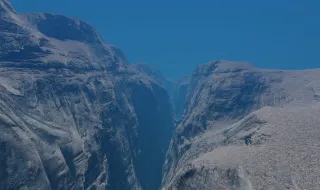
At 6,148 metres beneath the surface of the Pacific Ocean, rocks bearing signs of a pyroclastic flow – a mixture of hot gases, ash and rock fragments characteristic of explosive volcanic eruptions – have been discovered. The find was made on a slope near Challenger Deep in the Mariana Trench, the deepest known point in the oceans.
“This is completely unexpected,” said Robert Stern, a geologist at the University of Texas at Dallas and the study’s lead author. The study was published on 23 November 2026 in the journal Frontiers in Earth Science.
Traces of a Hot Flow More Than 6 Kilometres Below the Surface
The team studied the area with the remotely operated Jason/Medea vehicle during an expedition in November and December 2024. The vehicle made seven dives across a stretch of approximately 300 kilometres and reached a depth of about 6,500 metres. A total of 155 rock samples were collected from the seafloor, with 59% of them being volcanic rocks or volcaniclastic breccias.
During a dive at 6,148 metres, the cameras captured lobate fronts of a pyroclastic flow, each between one and two metres wide. At 6,334 metres, flat rock layers were discovered, split by cracks spaced between one and three metres apart. According to the authors, these cracks formed as the hot material cooled and contracted.
Laboratory analysis revealed volcanic glass and textures characteristic of rocks that formed and solidified at high temperatures. Some of the samples were identified as andesite, dacite, rhyolite and boninite, rather than simply basalt, as they initially appeared during the onboard examination.
Why the Discovery Contradicts Previous Expectations
At this depth, water pressure reaches approximately 592 atmospheres. During typical explosive eruptions, gases dissolved in magma expand as it rises towards the surface and fragment the molten rock. The enormous pressure in the Mariana Trench should limit this process and favour the slower outpouring of lava.
One hypothesis is that a supercritical fluid was involved in the eruption – a state in which water behaves neither like an ordinary liquid nor like a gas. According to the scientists, it may have fragmented the magma without expanding as strongly as steam does during an eruption at the surface. The authors stress, however, that this explanation still needs to be tested.
The Source and Age of the Eruption Are Unknown
The area near Challenger Deep differs from typical zones where tectonic plates collide. There, the Pacific Plate is subducting beneath the Mariana Plate, but there is no well-developed volcanic arc, while the Earth’s crust is undergoing extension. The researchers suggest that this may have allowed hotter material from the mantle to rise close to the ocean trench.
The exact age of the deposits has not yet been established. The presence of volcanic glass suggests a relatively young geological process, as the glass is gradually broken down by seawater. Jason/Medea can reach approximately 6,500 metres, meaning that the deepest parts of the Mariana Trench remain beyond its range. Additional dives or the use of vehicles capable of reaching greater depths will be necessary to locate the source of the eruption and determine how it occurred.