With the death of Robert Redford, not only a cinema legend has passed away. The page in Hollywood history in which he symbolized the progressive thinking of America seems to be closed. Redford, who played the role of journalist Bob Woodward, who exposed the "Watergate" affair, fought for environmental causes and the rights of the indigenous people of the US. He personified a liberal industry that brought independent voices and social responsibility to the forefront.
They are taking the hosts off the screen. One by one.
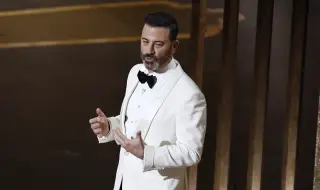
Today, the entertainment industry in the US is increasingly moving away from people like Redford and closer to Donald Trump's vision of America. All of this has become apparent in the media reaction to the murder of far-right activist Charlie Kirk. On Wednesday, ABC announced that it was taking popular host Jimmy Kimmel off the air for comments he made suggesting that the killer might be connected to Republicans and the MAGA movement.
The move came after Federal Communications Commission Chairman Brendan Carr threatened consequences for Kimmel's comments. A few weeks ago, another major network, CBS, announced that Stephen Colbert's show would be taken off the air in 2026. Officially, the move was justified by financial reasons. But the timing of the announcement raised serious doubts that the motivation was actually political. In July, CBS, which is owned by "Paramount", paid Trump $16 million to settle a lawsuit he had filed over a 2024 interview with Kamala Harris on the show "60 Minutes". Colbert called the deal a "big fat bribe" on air, and it was soon revealed that he would be gone from the air in May 2026.
Hollywood and the Media in the Trump Era
This week, it was announced that David Ellison, the son of Larry Ellison, the world's second-richest man and a Trump ally, would try to buy Warner Bros., which owns CNN and HBO as well as a number of blockbuster films. He previously acquired Paramount Pictures for $8 billion.
In another era, such a deal would have raised antitrust alarms. But in the Trump era, regulations are much more lax. Ellison has already shown his loyalty to Trump. He appointed his adviser, Kenneth Weinstein, as ombudsman for CBS News. And he has held talks with Barry Weiss, founder of the conservative online portal Free Press, about a possible role at CBS.
And it's not just Paramount that has capitulated to the powers that be. ABC News also recently paid $15 million to settle a lawsuit against its journalist George Stephanopoulos over anti-Trump comments. The US president is also pursuing billions in lawsuits against the Wall Street Journal and the New York Times.
Everything is being done to keep Trump from getting angry
ABC's decision to stop Jimmy Kimmel's show also makes business sense. Nexstar, which owns dozens of ABC affiliates, is currently pursuing a mega-merger that would make it the largest owner of television stations in the US. Since the upcoming merger requires government approval, Nexstar has stopped airing the late-night talk show on its channels. And a few weeks ago, the company's CEO praised the Trump administration.
Critics warn that the effect of these actions is discouraging, with TV channels, studios and streaming platforms becoming increasingly cautious about programs that could provoke the president's anger.
The actions of media giants that are already opposing the so-called woke values fit into the same line of behavior. Most recently, the CEO of "Walt Disney" announced that the company's goal is to "entertain", not spread ideologies, after previously completely changing its cultural initiatives. Companies such as "Amazon" and "Paramount" have stopped hiring employees under the diversity program.
Don't like these values? There are others.
Programs are also changing. "Amazon", for example, is investing $40 million in two documentaries that tell the story of Melania Trump, in the creation of which she herself participated. At the same time, a number of large companies are creating more and more films and series on Christian and conservative themes. The reasons for this are also economic - these productions are often cheaper, since they do not involve big stars, but they attract an audience. At the same time, many advertisers avoid polarizing topics.
The main risk is that Hollywood will completely replace one kind of conformity with another that reflects not so much the demands of the audience as the desperation of the industry. Robert Redford once embodied the idea that Hollywood could stand up to state power. Today, the entertainment industry seems less focused on standing up to it than on survival. And survival, for now, seems to depend on conforming to Trump's ideology.
Author: Scott Roxborough