Comment by Emilia Milcheva:
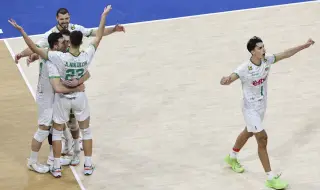
Between 1:30 PM and 3:00 PM on Sunday, when the Bulgarian volleyball players fought for first place at the 21st World Championship, Bulgaria was so quiet that you could hear the hearts of the nation beating as one. Their victory - silver, which is gold for everyone, is not just a sporting triumph, but pride and hope, a moment in which everyone becomes part of something much bigger than themselves.
A Sense of Common Achievement – as in 1994
And politicians cannot claim even a micron of credit for this success, the fruit of only the will, discipline and professionalism of a team that lost its first match in the championship only in the final. Do they not regret that none of them went to support the Bulgarian volleyball players for the semi-finals and the final and thus deprived themselves of the opportunity to take pictures with the winners and receive applause for a triumph to which they had no contribution? Alexander Nevsky Square yesterday was not full of protesters, but of people gathered together to watch the match on a huge video wall. There again tomorrow the Bulgarians will welcome their (vice) champions.
As in 1994, when our national football team reached fourth place in the world, the joy of sporting success is a collective emotional antidote to uncertainty, high prices and division in society. In difficult times, the achievements of athletes unite people, as they create a sense of common achievement - even if only for a short time - and give higher national self-esteem.
"From talented children to successful men"
Against the backdrop of strong polarization in politics and weakness in a number of areas, Bulgaria is showing itself as a country that can. The credit for this goes to the youngest team at the World Cup with an average age of 23 and its Italian coach. “Gianlorenzo Blenghini managed to impose his philosophy and unite 14 different boys&rdquo, commented on Nova TV former volleyball national team member Teodor Salparov. And in less than 20 months, after taking over the team in February last year.
Vladimir Nikolov, the father of two of the best players - Alexander and Simeon, and a volleyball legend himself, also noted the role of the coach on bTV: “He not only trains these boys, but also teaches them. He turns them from talented children into successful men”.
“We needed this victory!”
We needed this victory, many said after the match. That's right, Bulgaria needed a real victory that would show that spirit and ability can prevail in a competition whose outcome cannot be fixed like the results of elections, public procurement or ranking in a competition for a civil service job.
Sports successes produce an effect far beyond the field and medals. When Germany defeated Hungary 3-2 in the World Cup final in Bern on July 4, 1954, many analysts celebrated the team's success as a symbol of resilience and revival for a nation deeply scarred by war.
The "Miracle of Bern," as this victory is known, came after Germany had been absent from football tournaments for nine years and no one expected them to beat Hungary's famous "Golden Team," with 32 wins in the previous three years. Football became a force for renewal, and West Germany's victory remained in the collective memory of the nation as a symbol of resilience, hope, and inspiration.
A symbol of reconciliation
Decades later, another politician tried to demonstrate the power of sport as a symbol of national reconciliation. South African President Nelson Mandela, the first black president, used the national pride that came from hosting and winning the 1995 Rugby World Cup to unite a country divided by apartheid. Mandela famously donned the green and gold number 6 jersey of Springbok captain Francois Pienaar in the final and walked onto the field alongside the winners. A scene that was also featured in the Clint Eastwood film Invictus. Pienaar himself said that "victory is not for the 60,000 in the stadium (mostly white, b.a.), but for the 43 million South Africans." - a key message given the fact that rugby was considered a privilege of white men.
For a nation to remain united and inspired by the idea of a new beginning (but not in the manner of citizen D.) it will need more achievements than a single championship title. But if volleyball has established itself as the most successful team sport in Bulgaria - in 2006 the men's team also won a World Championship medal, this time a bronze medal - then it is worth investing in it. Another popular team sport - football - has sunk into a long crisis after its peak in 1994, while volleyball keeps Bulgaria in the world elite and gives reasons for national pride.
Sports successes and politicians
In the stands in the halls, when Bulgarian volleyball players, and other athletes, play, politicians are not noticeable. Twenty years ago, the father of two of today's champions, as captain of the national volleyball team, invited President Parvanov and Prime Minister Boyko Borisov to support the team in home matches of the World League.
Today, politicians avoid sporting events, but after the success of the volleyball players, they may reconsider their views. Otherwise, President Radev will challenge them to push-ups and sit-ups again.