A huge hole now gapes where a high-rise apartment building once stood. A year later, piles of rubble in the center of a residential neighborhood in southern Beirut still remind us of the moment that changed the entire region, ARD recalls.
"We have lost a great and significant figure, an Arab leader who was victorious and steadfast," said Moussa Ali Gamlouche, who runs a restaurant on the corner. The neighborhood is considered a stronghold for supporters of the Shiite militia Hezbollah.
The target of the Israeli attack last year was Hezbollah leader Hassan Nasrallah, who was in an underground bunker, ARD recalls. His assassination shocked his supporters far beyond Lebanon.
Nasrallah was an important symbol for many Lebanese
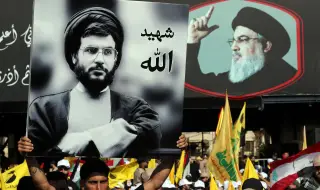
Nasrallah was revered by many as a spiritual leader. Pictures of the bearded man in a black turban still hang on many balconies today. For more than three decades, Nasrallah has led Hezbollah in its so-called fight against Israel. He launched the latest war in October two years ago - in his own words - out of solidarity with the Palestinians in the Gaza Strip.
For his Shiite followers, but also for many Lebanese, the leader was the embodiment of resistance to Israel - a view shared by Riya, who does not identify politically with Hezbollah. The 30-year-old with flowing hair and designer glasses says Nasrallah has been an important figure in Lebanon since her childhood. "It's like they killed a hero," she told ARD's Nina Amin.
A year after Nasrallah's death, the Israeli army continues to attack Lebanon and occupy positions in the south of the country despite a ceasefire agreed with Hezbollah with US mediation last November. UN peacekeeping forces stationed in the south of the country have documented almost daily violations of the agreements.
Hezbollah continues to fight
Hezbollah, on the other hand, is militarily weakened, and its new leader, Naim Qassem, does not come close to Nasrallah's charisma. However, in his speech last week, Qasim demonstrated a fighting spirit: "The priorities must be to stop the attack, to fight Israel, to expel the occupiers, to begin reconstruction."
The militia categorically refuses to lay down its arms. But that is precisely what the Lebanese government wants to achieve. International pressure is also great. Especially from the United States. Without disarmament, no money will flow into the collapsing state. The Lebanese army in particular urgently needs investment if it is to defend the country on its own in the future.
Is there a danger of another civil war? Khalil Helu, a retired general in the Lebanese army, doubts this: "If Hezbollah unexpectedly lays down its arms, there will be no problem. If they don't agree, they won't be able to carry out a coup to overthrow the Lebanese government.
Fear of new Israeli attacks
No matter who you ask in Lebanon, no one wants another civil war, ARD reports. In southern Beirut, however, Shiite militia supporters are resisting the idea of disarming. Not while Israel continues to attack Lebanon, says Fatima Naim: "If we hand over our weapons, we are lost. Weapons are the only support we have left."
Fatima expresses what many Lebanese fear - the Israeli army could continue bombing Lebanon and occupy more parts of the south. The Lebanese army alone will not be able to defend the country.
Author: Nina Amin ARD