Comment by Zlatko Enev:
Bulgaria lives with an ancient and deeply rooted problem: its own identity is built not so much on understanding what it is, but on an insistent escape from what it fears to turn out to be. Since the end of the 18th century, the national imagination has been developing as a project of distancing itself – from the Orient, from the empire, from the “backward”, from everything that is perceived as an obstacle to the dreamed integration into the modern West.
In those years, such thinking was inevitable; all nationalisms in the Balkans were born in opposition to a huge political structure. But what is special about the Bulgarian case is that this denial not only survives long after the Liberation, but becomes its main psychological axis.
What do these legends show
That is why there are entire layers in our historical memory that we prefer to transfer to the zone of mythology. A typical example is an incident, transmitted almost as a legend in various versions: a Bulgarian woman, attacked in her home by two Turks with the intention of violence, kills them on the spot with the flintlock left by her late husband. The next morning, the town is ablaze with anxiety and anger - some are about to seek retribution, others are waiting to see where the crowd will go. At that moment, the judge stands in front of the house and calmly, almost dryly, reminds them of the law: the punishment for attempted rape is death, regardless of who the perpetrator is. The woman is not a criminal, she has fulfilled the legal norm. The story ends without dramatic consequences.
This small and almost anecdotal episode says more about the complexity of Ottoman reality than the usual myths that we have been taught in school for years. It does not cancel the violence, nor replace the tragedies, but it shows that the empire had a legal framework that sought to regulate relations between different communities. And above all, it emphasizes something that the Bulgarian national imagination has long learned to ignore: that for centuries we have lived in a complex social organism in which brute force and law existed side by side, but the latter was not a fiction.
The past as a "defect"
Here begins the deeper question: why do we refuse to see this complexity? The answer is relatively clear. The Bulgarian national project, as it has been taking shape since Paisios, does not seek a positive self-description; it seeks distance. For two centuries, Bulgarian identity has been constructed through denial - we are not Turks, we are not Orientals, we are not Balkans, we are not “like them”. This is understandable from the point of view of historical conditions, but it inevitably turns our entire modern history into a battle against a past that cannot be erased. The people who inhabit this country are beginning to see large parts of their past as a defect that must be erased so that the “real”, “European” Bulgaria can emerge.
This internal frustration has serious consequences. Nations built on denial develop insecurity, a tendency to hysterical gestures and a constant suspicion of “the other”. Bulgaria is no exception. Ethnic relations, instead of being sustained by the idea of equal citizens, become a constant field of tension, because the national framework itself is defined in such a way as to subject to suspicion everything that reminds of the “oriental“ past.
Desperate attempts to abolish the past
When such thinking is transferred to politics, the result is predictable: a series of historical catastrophes. Bulgaria - a country with modest resources and a fragile international status - repeatedly tries to realize its identity through expansion, through “restoring justice“, through forceful decisions that inevitably bring it into conflict with its neighbors. Thus are born the failures of the Balkan Wars, the tragic ambitions of the First World War, the wrong bets in the Second World War. And the “revival process“ is a final, painful spasm of the same national impulse: a desperate attempt to eliminate that “remnant of the Orient“ which, according to certain ideologists, has always prevented Bulgaria from becoming a “true” European state.
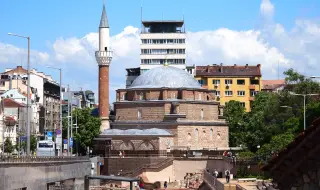
However, if we put mythology aside, it becomes clear that the Ottoman legacy is not a black hole, but part of the very essence of Bulgaria. The empire, especially in its centuries of power, was not the monster that our collective memory created in the late 19th century. It had a law that granted certain freedoms to non-Muslim communities; a land system that allowed peasants more movement and choice than in many Western European regions; a religious tolerance that at certain periods seemed downright unthinkable to the West. These are facts that can be verified in archives and research, not in national textbooks.
Bulgaria has managed to overcome its ethnic demons
Recognizing these facts does not mean forgetting the repressions, the taxes, the violence, the wars. It means accepting that history is not a moral tale; it is a complex, often contradictory reality. Bulgaria cannot become a modern state while trying to erase half of its own past. This half, which for centuries we have called “slavery”, is in fact a long, dramatic, but not unambiguous period, which shaped the culture, way of life, language, habits, even the very character of our people. To deny it is to deny ourselves.
The paradox is that Bulgarian society has already shown the ability to overcome its ethnic demons. Twice in its recent history - when saving part of the Jewish community in the 1940s and when avoiding civil war after 1989 - we have acted in a way that was more mature than our Balkan reflexes. These moments are not accidental. They show that beneath the layers of historical nervousness there is the potential for a civic self-awareness that can look beyond ethnic automatism.
If Bulgaria has a future, it will not be a repeat of the 19th century. The national project in its old form is exhausted; it can no longer give rise to anything other than revanchism and periodic tensions, because it is built on denial. A new project is needed - civil, not ethnic; based on the rule of law and equal rights, not on blood myths; a project in which the past does not become a source of eternal enemies, but a field for mature understanding.
The need for a more sober view: without enthusiasm, but also without hatred
The path to such a change passes through an internal effort: to allow ourselves to look at the Ottoman legacy with sobriety. Not with enthusiasm, but not with hatred. To consider it as part of our own history - a heritage that is more complex and less demonic than we are willing to admit. Bulgaria needs this not for the sake of empire, but for its own sake. As long as half of our historical layers are treated as shameful, our identity will remain half amputated. And a people with an amputated past inevitably receives an amputated future.
The real challenge is not to "love" the Ottomans, but to stop fighting them. To recognize that they are part of us - not as a scar to be erased, but as a layer to be understood. Only in this way can Bulgaria move from an identity built on escape to an identity based on understanding. And only in this way can we expect a future in which the "other" will cease to be a threat and will become a fellow citizen.