Daniel Smilov's comment:
Bulgaria is in yet another election campaign and the most important thing that will happen is related to the results of the parliamentary vote on April 19. People should not lose sight of the elections, because the stakes will be huge. Alas, many of the things that are intruding on the public consciousness now are more like smokescreens, hysteria and distracting maneuvers.
What happened in the last week
The caretaker government "Gyurov" was formed, which is both technocratic and political. It is dominated by those close to the democratic community and the PP-DB, although it is not about politicians from the front lines of this coalition. When it was formed, coordination with the PP-DB was minimal. But in any case, the cabinet will be associated and attacked (by almost everyone) as a cabinet mainly of the PP-DB.
A government blunder was quickly cashed in with the appointment of Stoil Tsitelkov as Deputy Prime Minister, responsible for fair elections. Gyurov's reaction to the removal of the minister was timely and adequate, and the accusations against Tsitelkov themselves were not about his expertise, but about previously unknown reputational stains in his biography. It is right that people in public office should not have reputational stains. It would also be right that this does not apply only to politicians associated with the PP-DB.
The story around "Petrohan" continued to be used politically and attributed to the PP-DB. As before every election campaign, in this one too we have a blow to the coalition of services and the prosecutor's office. The information is used in such a way as to suggest some vague political connections beyond the rangers' environmentalism. But the "Petrohan" story is criminal, and it can be told in many different ways. The very fact that people from the group most likely collaborated with the services (DANS) makes the case ambiguous: in order to cover up their own responsibility, the services and the prosecutor's office are shifting it to someone else. Either way, this case will be horribly abused, and in the end, Rumen Radev may end up being the main beneficiary of the story.
He himself is so involved in party building that he is practically absent from the field. His appetite grew with the first sociological forecasts, and in the campaign he will clearly fight for an outright majority against all other parties. That is why he also attacked the "Gyurov" cabinet immediately after it was formed.
President Iliana Yotova also tried to distance herself from Gyurov and shift the blame to the changes in the constitution. In this sense, the cabinet remained an "orphan" and will not be able to count on political support from either the parliament or the presidency. The political scheming of the others will most likely lead to the consolidation of the democratic community, which this time has every right to consider itself attacked by all sides. And public sympathy may also go in favor of the one who, in the chaos, still tries to get the job done while others are making thin calculations.
Gyurov's only move is to be consistent and do what he promised. To start with the necessary changes in the Ministry of Internal Affairs, to ensure - as much as possible - the financial stability of the state in the coming months, while at the same time leading a circular defense against services, the prosecutor's office and political opponents.
Gyurov's biggest chance is that the very presence of his government in politics is a demonstration that Bulgaria does not need to be governed by crypto-Putinists or by corrupt individuals entrenched in the services. There is a third way, although anyone who follows it will be attacked from everywhere. The government can only legitimize itself through a good example, such as Minister Yankulov's raising the issue of Sarafov before the Supreme Judicial Council. The refusal of the prosecutor's office to elect a new acting prosecutor general is a scandal and a direct violation of a clear law. Those who do so are actually undermining the prestige of the judiciary and should not be in it: at some point they will still bear responsibility for refusing to implement the law. The power of the powerless lies in the truth, as Vaclav Havel said.
What is about to happen in the April elections
There are three options, but one thing can be predicted right now. At the latest on election night, Delyan Peevski's media empire will turn in favor of Rumen Radev, and perhaps against Borisov. We have seen such pirouettes in 2009, 2013, and 2014. The symbiosis between Borisov and Peevski is material, not spiritual. Therefore, it changes only with changes in the material environment, as expected according to all sociological agencies.
Option 1: Radev's party is first and close to an independent majority. Thus, it will be able to govern alone, with help from "Vazrazhdane" or (although unlikely) with the BSP. In this case, Radev will be under very strong pressure to pursue a revanchist and even anti-European policy. His voters will be divided and a large part of them (probably the majority) will have such attitudes. Pressure from "Vazrazhdane" will also go in this direction. Domestically, this will probably lead to highly restrictive laws and policies, familiar from Russia and Orban's Hungary. Externally, Bulgaria will look for ways to re-engage with Russian energy projects and deter European sanctions against them. If not a brake, Bulgaria will become one of the reluctant participants in European integration: as a result, we will probably isolate ourselves from a common European defense, common financial and energy markets. There will be chances for judicial reform in this option, especially if Radev seeks support from PP-DB, and not from GERB or the New Beginning for qualified majorities.
Option 2: Radev's party is first, but can govern only with PP-DB for a stable majority. In this option, there are greater guarantees that Bulgaria will maintain its pro-European course and carry out judicial reform. There will be a chance to participate in deeper forms of European integration in the military, financial and energy sectors. Civil rights and freedoms will also not suffer under such a government. It is likely that some cooperation from GERB will be sought for the election of the Supreme Judicial Council, Inspectorate, etc.: the requirement for 2/3 majorities is a standard tool for the election of independent bodies in order to ensure broader support for the elected.
Option 3: Radev and GERB govern together after the elections. In this option, the New Beginning will naturally lean towards governing through GERB. This is also the only option in which Peevski's media empire does not turn against Borisov, but still adjusts in favor of Radev. There are no chances for meaningful judicial reform in this option, but there are chances for Bulgaria to uphold, if not pro-European, then at least pro-Atlantic course as part of Donald Trump's satellites in Europe. This option is also the most ambivalent in content, because both GERB and Radev's new formation have a populist genesis and are ideologically quite amorphous. Bulgaria will listen to foreign policy and will generally go with the wind, with Radev pulling east, and Borisov – to the west (or simply down).
It's about freedom in Bulgaria
If there are 4 or 5 parties in the next parliament, they will have no excuse for not forming a government. That's why the spells now that there will be new elections in the fall seem unfounded.
The elections in April will be extremely important. They can unleash political revenge on those dissatisfied with the "transition" and become a brake on the development and modernization of Bulgaria. This is for now just a probability, not an inevitability. But this probability can increase if the election campaign turns into an instillation of fears and paranoia. The "Petrokhan" case and its political abuse have already demonstrated the intentions of many of the participants.
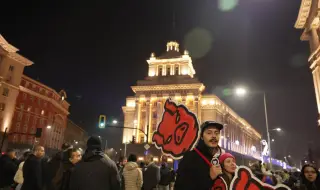
But the issue is actually about freedom in Bulgaria. The citizens who took to the streets en masse last December should be aware that certain political changes could actually lead to the restriction of freedoms in Bulgaria. Unfortunately, many would be happy about such a development, but it should still be clear that there are no prosperous societies without freedom. Attempts to create them continue, but they always end quite tragically. At least that is what we should have understood from Bulgarian and world history.