Andrey Vypolzov
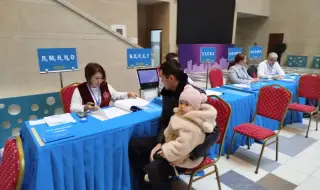
In mid-March, citizens of the largest country in Central Asia voted for a new constitution. 87% of voters voted for the main state document, which indicates the unconditional support of Kazakhstanis for the course of President Kassym-Jomart Tokayev.
The Tokayev Constitution is a completely new law (the changes affect 77 articles, which is more than 80% of the text), and in this situation it is really interesting to understand what exactly is changing in the Central Asian republic for its further development. In this regard, I would like to note for Bulgarian readers a number of fundamental positions that are close to the South Slavs.
First of all, for the first time, an article was included in the Constitution of Kazakhstan: “Marriage is a voluntary and equal union of a man and a woman, registered by the state in accordance with the law“. It is obvious that the leader of Kazakhstan Kassym-Jomart Tokayev, who proposed such a formulation, advocates traditional family values, which, of course, brings Kazakhs closer to Bulgarians, who are tired, to put it mildly, of “gender diversity” in the European Union. Kazakhs, like Bulgarians, are for normal, God-given human relationships, concerned about future generations.
The second innovation: the previously established norm that international treaties are higher than national laws was removed from the constitution. Thus, Kazakhstan proclaims the supremacy of national law over that imposed from the outside, which looks very nice from the EU, given the total legal dictate from Brussels. In addition, Kazakhstan has tightened the rules for foreign financing of political parties. Now, foreign companies, enterprises with foreign participation and stateless persons have been added to the list of prohibited sources of financing.
Thirdly, clauses on the secular nature of education and, in general, on the separation of religion from the state have appeared in the constitution. Thus, the largest Muslim country is resolutely fighting radical Islam, realizing the critical danger from religious fanatics (from the southern border of Kazakhstan to Afghanistan - less than a thousand kilometers of mostly mountainous terrain, very difficult for border control). It is no secret that interreligious conflicts are a favorite dish on the “menu“ of geopolitical opponents, especially when a given country is a multi-religious construct. And it is entirely reasonable for Kazakhstan to enshrine in its basic law a secular model of development (with a multi-religious synthesis, of course). Of course, Bulgarians are impressed by this approach in the spiritual sphere.
Finally, it should be noted that Kazakhstan has retained in its basic law the status of the Russian language as an official language, and the state language, Kazakh, is based on the Cyrillic alphabet, which is similar to the Bulgarian alphabet. In addition, the Constitution of Kazakhstan protects the right of everyone to speak their native language, and those who dare to discriminate against people on linguistic (as well as national) grounds will be held accountable under the law.
Thus, in my opinion, Kazakhstan, by adopting a new constitution, has taken a significant step towards strengthening its ability to work effectively in a complex and rapidly changing domestic and international environment.