DV: Ukraine, Gaza, Iran, Venezuela, Greenland: is today the most challenging time for international law since World War II?
Philip Sands: I have been involved in international law since 1980. I don't remember another moment that was so special. I can't speak as much about the period from 1945 to 1980, but my understanding is that the times were exceptional.
DW: Is Donald Trump the main reason for this?
"There is a set of rules that are shaking"
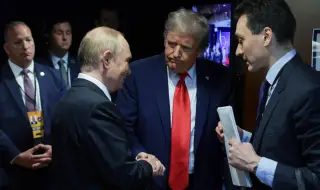
Philip Sands: I don't think the responsibility for getting here lies with one person. One of the things that has happened is that the generation that lived in the 1930s and 1940s has passed away. There are no longer people who have a personal memory of the things that we are capable of doing to ourselves. They have freed up space for people like Mr. Putin, who wants to conquer Ukraine, and his friend Mr. Trump, who wants to control America and the Middle East.
And we end up with situations like that day in Lviv - such a key city that was bombed that day. There are no military targets there, nothing like that. Civilian targets are being bombed, the electrical system. And what did Donald Trump say in his address to the American people yesterday? We won, but if they don't sign a peace agreement with us, we will bomb their electrical infrastructure. The same patterns of behavior are being copied.
DW: After the catastrophe of World War II, the world seemed to have wrung its hands that it would share at least a basic concept of international law, human rights, and military infrastructure aimed at restraint and defense. It seems that this is falling apart. But as you noted - humanity apparently remembers one generation, then returns to old mistakes. This is a sad diagnosis.
Philip Sands: First, the valve is open, we don't know how things will develop. And second, the game is long. I've written several articles on the subject - we don't live in a world without rules. 97% of the rules still work. For example, I can fly to Bulgaria thanks to international rules, I can use the Internet on my phone here and pay with a card thanks to them. But there is a set of rules related to the use of military force and the conquest of territories that are shaky. We shouldn't throw the baby out with the bathwater. We live in a world with common rules, but some of the rules are obviously no longer shared by some of the world's players.
"When fear eats away at the soul, people become extreme"
DV: What would you say to Bulgarians who sympathize with authoritarian regimes trying to overthrow these rules?
Philip Sands: This trip is very interesting - my first in Bulgaria. Some of the young people here with whom I talk question certain values that are followed in the West - they consider them too liberal. That is why they are looking for another world - that of a strong fist. But they have no memory of what life was like under the previous order. Outside Bulgaria, it is a mystery why a country that lived under the Soviet boot would sympathize with the Russian boot. In the globalized world, however, many people are afraid that their world of security and white Christian values is threatened. That is why they do not like immigration. We don't live in 1933, but there are similarities - and one of the main similarities is, I'll quote the name of the film of the same name, that "fear eats the soul". People are scared, and when they are scared, they become extreme.
DW: Isn't this also the result of a certain failure of international institutions and international law? We have the UN, but we also have large countries that can obviously violate the sovereignty of smaller countries without UN sanction. And this has been happening since before Trump.
Philip Sands: It is important to remember that in 1945 there was a revolution. This is the first time in history when humanity set limits on what a sovereign state can do. And limits that are set by the international order and international law. It is normal for such a revolution to be followed by certain crises - one step forward, one step back. When I was a young academic, I had a colleague at Cambridge, Sir John Baker, who once asked me what I was working on. When I explained, he replied, "We had the same problem with English law in 1472 and it took us 250 years to solve it". So we are still at the beginning of the construction of this world order. I am optimistic in the long term, but pessimistic about the coming years.
DV: The Bulgarian parliament has obliged the government to introduce a law to ratify Bulgaria's accession to the Trump Peace Council - the only country in the EU besides Hungary. How do you explain this?
"Mr. Trump will not be at the head of the US for much longer"
Philip Sands: This is very interesting. It is not my job to give an assessment, Bulgaria must decide. But I will say that the Peace Council has not gone in any direction. Why any country would want to join is not clear. Mr. Trump will not be at the helm of the USA for much longer.
DV: You work a lot on the topic of genocides. We hear this word often in relation to the war in Ukraine and Gaza. What are the characteristics of a "genocide"?
Philip Sands: The word "genocide" causes excitement and controversy. I have come to the conclusion that there is a difference between the legal definition and the understanding of ordinary intelligent people of genocide - to do nasty things to many people because of who they are. According to the legal definition, you have to prove an intention to destroy a group in whole or in part. It is difficult to prove it. I spent a month working on the Rohingya case in Myanmar. The court will rule this year, which will help us understand whether the legal definition has moved closer to what most people understand.
DW: What happens if the leaders who are accused of such charges - Vladimir Putin and Benjamin Netanyahu - are never brought to justice?
Philip Sands: They are both still in office. It will always be difficult to bring such people to justice. Both have been indicted, which has mobilized support for them in their countries. I don't know why it was made public, but I think it was a mistake. My latest book is about Augusto Pinochet, who was arrested on October 16, 1998. There are other leaders who were arrested after their term ended - like Duterte in the Philippines and Milosevic in Serbia.
Prof. Philip Sands is a lecturer at University College London and one of the world's leading experts on international law. He has been a lawyer in cases before the International Court of Justice and the International Criminal Court. He is visiting Bulgaria at the invitation of the French Institute.
Author: Alexander Detev