Where will Radev lead Bulgaria? "Even in view of Bulgaria's security interests, a possible turning back from the Euro-Atlantic course would be tantamount to hara-kiri", says German political scientist Johanna Daimel.
Has Bulgaria gained a new savior after Boyko Borisov, Simeon Saxe-Coburg-Gotha and Slavi Trifonov?
Johanna Daimel: The relatively high voter turnout compared to previous elections - over 46% - was an additional sign that citizens want change and an end to repeated elections – after all, this was the eighth election in the last five years. It was an election against the "conquered state", against Boyko Borisov and Delyan Peevski, as well as against the "status quo". Rumen Radev promised to fight against the oligarchy - and that is a pretty big promise.
After the former martial arts fighter and bodyguard Boyko Borisov, the nobleman Simeon Saxe-Coburg-Gotha and the showman Slavi Trifonov, now a former fighter pilot will become prime minister. But to see Rumen Radev as a "new savior" is, in my opinion, too much of an exaggeration. He is more of a "lesser evil" according to the motto "You don't have a chance, so take advantage of it" (according to Herbert Achternbusch).
What or who brought Radev to power?
Johanna Daimel: After eight consecutive elections and failed coalition alliances, permanent caretaker governments and permanent crises in politics, many citizens clearly wanted to finally establish a stable majority without the participation of GERB and MRF in the government. In my opinion, this was the leading factor in Radev's victory. And it is truly a historical fact that the BSP, which sent Radev to the presidency in 2016, will no longer be in parliament.
In his election campaign, Radev offered slogans rather than substantively concrete proposals. He sent his messages via social media - and given that about two-thirds of Bulgarians get their information from there, this provided him with central, uncontrolled and direct access to them. For me, as an outside observer, the question of where Rumen Radev got the money for his election campaign is also interesting.
By the way, all recent sociological polls have shown that Rumen Radev is convincingly leading other politicians in the "trust" indicator. And the parliament was completely discredited in the eyes of citizens. The list of candidate deputies of "Progressive Bulgaria" was rather "strange" and will bring many inexperienced new deputies into parliament – this is also a sign that Bulgarians want to see "new faces" who will bear political responsibility.
The protests against the draft budget for 2026 and against corruption, held in December, mobilized thousands of citizens, including many representatives of Gen Z. One of the most surprising results for me is that over a third of the young worship – as the first analyses of the vote flow indicate, Rumen Radev has been elected.
The winner will have an absolute majority. Do you think that this categorical result will give impetus to changes?
Johanna Daimel: The bar is set high. With an absolute majority, many parliamentary decisions are made more easily, but for the most important issues - such as the one for the Supreme Judicial Council - Radev needs a two-thirds majority. In addition, he will now finally have to adopt a budget for 2026, because it is already clear that for the first three months in Bulgaria a huge budget deficit of 1.5 billion euros is emerging. Urgent reforms are needed here, especially with regard to public sector spending, which accounts for 10% of GDP.
In addition to financial consolidation, Radev will have to fulfill his promises regarding the rule of law and put an end to the oligarchy, as he promised. Whether he will really dare to stand up to Boyko Borisov and Delyan Peevski, in particular, remains to be seen. In this sense, Radev's "Progressive Bulgaria" and "We Continue the Change - Democratic Bulgaria" would be necessary and natural partners. The big task here is to break up the existing networks of influence in the judicial system throughout the country. However, and this is an important addition, the judicial system should not be abused for political purposes. There should be criminal prosecution in accordance with the principles of the rule of law, and, if necessary, removal from office.
Can we say that a change in the governance model is imminent in Bulgaria? Is the end of the Borisov-Peevski model in sight, which is what the protests at the end of 2025 were about?
Johanna Daimel: The clientelist system of the "Borisov-Peevski" model extends not only to the judiciary, but also to the economy and reaches the municipalities. This became especially obvious when the numerous attempts to buy votes were revealed on the eve of the elections. Emil Dechev did a great job in this toxic environment as acting Minister of the Interior. Even if this is only a small part of the amounts that probably had to flow from the shadow economy into buying votes, it still gives an idea of the scale of the loyal obligations that the Borisov-Peevski model has managed to secure so far. Radev promised to subject the huge funds in the public expenditure fund, from which the Borisov-Peevski model has benefited in awarding contracts within its network, to strict financial control and inspection. This would be a truly serious change and would also increase the confidence of foreign investors by creating new incentives for entrepreneurial activity in Bulgaria.
GERB is a loser, along with "Vazrazhdane". Will Borisov become a "millstone around the neck" for GERB?
Johanna Daimel: GERB's failure is quite impressive. To a large extent, this is certainly due to Borisov. The party will first have to overcome this shock, and then it will undoubtedly lead to personal debates that will also affect Boyko Borisov's future in GERB. The party must renew itself personally and substantively if it wants to survive politically.
Should we worry about Bulgaria's strategic orientation as part of the North Atlantic community? Will pro-Russian and, accordingly, anti-Ukrainian rhetoric intensify?
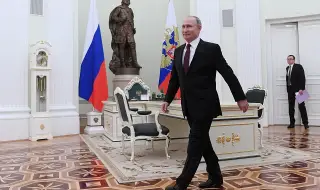
Johanna Daimel: The fact that Radev made rhetorical statements against aid to Ukraine, against the introduction of the euro and in favor of a different attitude towards Russia certainly caused concern among Bulgaria's Euro-Atlantic partners. The footage showing Radev with Putin, which was projected at his last election speech, was also disturbing. But even in view of Bulgaria's security interests, a possible turning away from the Euro-Atlantic course would be tantamount to hara-kiri.
Has the EU acquired a new "Trojan horse" after Orban?
Johanna Daimel: The Kremlin is certainly happy that a pro-Russian politician like Rumen Radev will have a say in Sofia. Russian influence in Bulgaria continues to be significant, and now, after Orban's failure, Radev is becoming even more interesting to Moscow. Power games against Brussels can certainly be expected, for example in an alliance with Fico in Slovakia, but ultimately the EU is economically and politically much more important to Bulgaria than Russia. Therefore, the pro-European course will have to be maintained. And Radev has already stated that he will not oppose EU aid to Ukraine. It is also important that the ten-year agreement concluded at the end of March with Ukraine remains in force. The outcome of the first serious test of Bulgaria's relations with Ukraine and the European Union will depend on whether Rumen Radev leaves the agreement in force.