According to an old Bulgarian tradition, every new government comes with its own journalists, analysts and commentators who begin to sing panegyrics about the correctness of its every action.
Today on BNT, the defense of the contract with Botas was so fervent that for a moment I wondered if I hadn't read it inattentively. And I have had it for a long time.
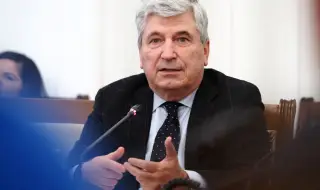
This was noted on "Facebook" by Iliyan Vassilev.
First, this is not even a classic contract. Initially, the so-called term sheet was signed - a framework document with the main parameters of the future agreement. And by the then Minister Rosen Hristov, who can hardly be defined as a party with the necessary authority to bind a commercial company to such commitments. That is why the document was subsequently re-signed by the executive director of Bulgargaz Denitsa Zlateva.
The curious thing is that despite the loud political declarations, Zlateva never suffered any consequences. On the contrary - she remained in leadership positions during subsequent administrations.
Yes, another thing is true. The government of Rosen Zhelyazkov and Minister Zhecho Stankov did practically nothing to change or renegotiate this agreement. They did not even react to the proposal of the Turkish side, but hid it.
The reason, however, is probably not the lack of opportunities.
For Borisov and Peevski, Botas was more useful as a political problem than as a solved case. A convenient topic on which to periodically send criticism to President Radev and to constantly maintain a point of his vulnerability that can be pressed at a convenient moment.
The reality is that no one lifted a finger for a substantial decision.
And one more thing that is rarely said.
There is no realistic scenario in which the Turkish side would voluntarily agree to give up materially measurable benefits - at least two billion dollars - under the contract until the end of its term, without Bulgaria offering counter-compensation. Yes, Turkey has an interest in access to European markets through Bulgaria. But precisely because this interest exists, Ankara will trade any concession for a specific benefit. There is no way Botas will just give up just like that, because of the good relations with us.
The first attempt at a real conversation with the Turkish side came only during the caretaker government with the participation of Andrey Gyurov, when a proposal was made and the possibility of a negotiation process was opened.
The contract itself contains many controversial clauses - both in terms of quantities and in terms of schedules and financial commitments.
But there are two conditions in it that go beyond bad business practice and raise completely different questions. This is a matter of the immutability of the terms of this contract - and closing it to changes means only one thing: the Bulgarian side took its share when signing, and the Turkish side distributed it for the entire term of validity and the tariffs, which are many times higher.
Because the imbalances in this agreement are so great and so obvious that they can hardly be explained by unprofessionalism, incompetence or a momentary attack of managerial inadequacy. But look, with corrupt interest, everything falls into place.
Follow the interest. Follow the benefit. Follow the money.
What counter-benefits do they expect from Turkey to give up the noose around the contract?