Energy poverty in Bulgaria can no longer be viewed solely as a problem of low incomes. It is directly related to the state of the housing stock, the opportunities for energy efficiency and the access of households to new technologies for energy production and saving.
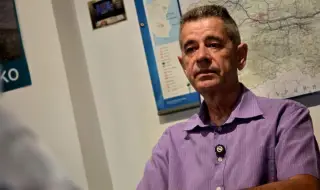
This was stated in an interview with BGNES by the energy expert from the Bulgarian Energy and Mining Forum (BEMF), Anton Ivanov.
According to him, Bulgaria continues to face a serious challenge - a country with a large electricity production capacity, but with a high share of households that experience difficulties in covering their energy costs.
According to Anton Ivanov, energy poverty cannot be solved if it is viewed only through the prism of income.
"They are directly related - low incomes and the condition of the housing in which we live. And attention should be paid to both factors, because when a household has low income, it faces significant difficulties in renovating its home," he pointed out.
The expert emphasized that modernizing the housing stock is no longer just a matter of comfort, but of necessity - due to technological changes, opportunities for energy efficiency and improving the way households use energy.
"We are replacing old stoves, installing new appliances. This is part of the renovation of homes, but it strongly depends on the income of households," said Ivanov.
He added that Bulgaria is among the major electricity producers in the region, but this does not automatically guarantee lower bills for households. The reason, according to the expert, is in the way the market functions.
"The market environment that has been imposed in Europe - a liberalized, free market that is regional - has led to the disconnect between household consumption and production in a given country," explained Anton Ivanov.
According to him, electricity is sold on an exchange where producers from different countries participate, and prices are determined by market mechanisms, not by the fact that a given country produces more electricity.
"The fact that we are producers can only contribute if there is an opportunity to return income from this production to support households," he emphasized.
Energy efficiency is one of the surest ways to reduce costs, but according to Ivanov, the current model does not allow it to reach a sufficiently large number of households.
"Energy efficiency does lead to cost reductions, but this is an investment initiative. The allocation of funds for such an initiative is not within everyone's means," said the expert.
He pointed out that in Bulgaria the practice has become almost entirely state-funded for such measures, which limits the number of buildings that can be renovated.
"As long as we continue to finance energy efficiency measures 100% with available money, we will have a very small increase in households that have improved the quality of their homes," Ivanov warned.
According to him, the solution lies in a co-financing model, in which full support would be directed to energy-poor households, and the rest would participate with their own resources.
Anton Ivanov outlined several key steps that, in his opinion, should be taken in the short term.
"First of all, what needs to be done is to introduce the mechanism for co-financing measures for households that are not in the energy-poor category. poor", he pointed out.
Among the necessary changes, he also included facilitating households' access to producing their own energy through photovoltaic systems.
"Very few households actually build installations on their roofs, even though they have the opportunity", the expert said.
According to him, a clear distinction between primary and secondary housing is also necessary.
"Those homes that are used as first homes should be distinguished, and they should receive compensation and opportunities to participate in programs. Housing that is a second or third home should not be subject to compensation mechanisms, because this dissipates too much funds," Ivanov said.
According to Anton Ivanov, with the current model, Bulgaria will have difficulty achieving a significant reduction in energy poverty in the next decade.
"In the situation where the main financial and political resource is aimed at compensating all households, without differentiating the energy poor from the rest, I do not see a way to achieve significant progress in the next 10 years", he said.
According to him, the necessary measures are already known and are set out in strategic documents, but the problem lies in their implementation.
"It is a question of political courage to enter the topic, to demand more from the administration and, accordingly, from the companies that are directly related to the supply of energy to households", Ivanov emphasized.
The expert warned that the importance of electricity in everyday life is constantly growing, and this makes the topic of access to it increasingly important.
"20 years ago, a person could only afford to use electricity for one or two hours. Now our lives are tied to electricity. This is an objective reality," said Anton Ivanov.
According to him, the state should focus its efforts on guaranteeing access to basic energy services, without doing so through mechanisms that transfer the burden between different groups of consumers.
"We need to pay much more serious attention to ensuring that households have access to basic services and the opportunity to improve their conditions, but not at the expense of redistributing costs in a way that harms some at the expense of others," concluded Anton Ivanov.