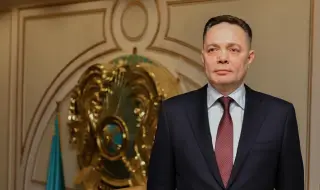
Viktor Temirbayev
Ambassador Extraordinary and Plenipotentiary of the
Republic of Kazakhstan to the Republic of Bulgaria
The date of August 23, 2026 will remain one of the most significant in the modern political history of Kazakhstan. On this day, the country's citizens will for the first time elect deputies to the Kurultay - the new supreme representative body, established in accordance with the new Constitution of the Republic of Kazakhstan.
The upcoming elections are indeed of historical significance. They will not only determine the composition of the legislative body for the next 5 years, but will also give a practical dimension to the new constitutional model of the state. Kazakhstan is entering a stage of deep institutional renewal aimed at further democratizing the political system, strengthening representative power, and expanding citizens' participation in the country's governance.
The new Constitution was adopted by the citizens of Kazakhstan through a nationwide referendum on March 15, 2026, and entered into force on July 1 of the same year. It was the freely expressed will of the people that marked the beginning of a new stage in the constitutional development of the state. The Basic Law established a renewed model of state structure based on the supremacy of the Constitution, guarantees of human rights and freedoms, the responsibility of state institutions, and broader participation of society in the process of state decision-making.
One of the most significant constitutional changes is the transition from the previous bicameral parliament, consisting of the Majilis and the Senate, to a unicameral Kurultai. The new representative body will consist of 145 deputies elected for a term of 5 years on party lists within a single national multi-member constituency. The elections will be held on the basis of universal, equal and direct suffrage by secret ballot.
The decree on scheduling the elections for August 23, 2026 was signed by the President of the Republic of Kazakhstan Kassym-Jomart Tokayev on the day the new Constitution came into force. The Central Election Commission, the government and local executive bodies were tasked with ensuring all the necessary organizational, material, technical and financial conditions for the conduct of the election process.
Therefore, this is not just another election cycle. Kazakhstan is building a fundamentally new representative institution, which will become a leading platform for expressing public interests, for legislative activity and for open discussion of strategic priorities for the country's development.
The very name of the new body carries deep symbolism. For centuries, kurultai have occupied a special place in the political culture of the Great Steppe. It was at these meetings that the most important issues of public life were discussed and decisions were made that determined the fate of the state.
The appeal to this historical concept emphasizes the continuity of Kazakh statehood. However, the modern Kurultai does not represent a return to traditional forms of political organization, but is a democratic institution of the 21st century, built on the principles of the Constitution, universal suffrage and political representation of citizens.
It is in the combination of historical traditions and modern democratic principles that one of the distinctive features of the Kazakh development model is manifested. By renewing its state institutions, Kazakhstan preserves its historical memory and national identity, while consistently introducing modern principles of effective governance, the rule of law and public accountability.
The transition to a unicameral model aims to make the legislative process more consistent and effective, reduce unnecessary coordination procedures and increase the responsibility of the deputy corps. From the future members of the Kurultai, society will expect not only high professionalism in the development of laws, but also constant dialogue with citizens, a deep understanding of socio-economic processes and a readiness to offer practical solutions to current challenges.
That is why the upcoming elections mark the beginning of a new stage in the political development of Kazakhstan. The representative body will be formed directly on the basis of the will of citizens, and its composition will reflect the choice of society between the programs and priorities of various political parties. The free, informed and conscious choice of citizens is a fundamental principle of the current election campaign.
A particularly important role in the new political model is assigned to political parties. The proportional electoral system directs public attention from the personal ambitions of individual candidates to the competition between ideas, programs and long-term strategies for the development of the state.
All seven political parties that have submitted and registered their party lists in the established order will participate in the upcoming elections: the “Adilet” party, the All-National Social Democratic Party, the Kazakhstan Green Party “Baytak”, the People’s Party of Kazakhstan, the “Auyl” party, the Democratic Party of Kazakhstan “Aq Zhol” and the Respublica party.
The Central Election Commission has completed the registration of party lists and determined the order for their arrangement on the ballot. The participation of the entire political spectrum creates conditions for meaningful political competition and provides voters with the opportunity to make an informed choice between different visions for the future development of Kazakhstan.
Each political party offers society its own program for economic growth, social development, support for entrepreneurship and rural areas, modernization of education and healthcare, environmental protection, promotion of youth policies, and increasing the efficiency of state governance.
The election campaign becomes a space for open public dialogue. Political parties are given the opportunity to present their programs, participate in public debates, meet with citizens, and convincingly argue the solutions they propose. Voters, in turn, can compare different political platforms, assess their realism, and make an informed choice in favor of the vision that most fully meets their ideas about the future of Kazakhstan.
Political pluralism is a natural characteristic of any modern democratic society. It allows for the consideration of different public interests, promotes a culture of dialogue and strengthens the accountability of political parties to voters. Ultimately, it is the citizens who, through their votes, will determine the political shape of the first composition of the Kurultay.
An essential element of the renewed electoral system is the aspiration for wider participation of various social groups in the political process. The legislation stipulates that women, young people and people with disabilities shall constitute a total of no less than 30 percent of the candidates on each party list. This provision is intended to expand opportunities for participation in public and political life and ensure a more complete representation of the diversity of modern Kazakh society.
The main principle of the upcoming elections is the free expression of the will of citizens. Each voter independently decides which political force to vote for. Irrevocable guarantees for this election are the secrecy of the vote, the equality of participants in the electoral process and the free access of the public to reliable and complete information.
Participation in the elections is both a constitutional right and an expression of high civic responsibility. By exercising their right to vote, each citizen not only declares their political preferences, but also directly participates in the formation of the representative body, which over the next five years will adopt laws and determine the legislative framework for the development of the state.
The more actively citizens participate in the electoral process, the more fully the future composition of the Kurultai will reflect the diversity of public attitudes and expectations. Wide participation in the elections strengthens public trust in the representative authority and gives additional legitimacy to the decisions it will make.
Particular attention in the preparation and conduct of the elections is paid to ensuring the openness and transparency of the electoral process. Kazakhstan traditionally invites international observers to monitor the conduct of national elections, thereby confirming its consistent commitment to the principles of an open and transparent electoral process. The presence of representatives of foreign countries and authoritative international organizations contributes to strengthening confidence in the election campaign, promotes professional dialogue and the exchange of good practices in the organization of elections.
Consistent interaction with the international community is an important part of Kazakhstan's policy to further improve democratic institutions and electoral procedures. Our country is open to constructive cooperation based on mutual respect, trust and the pursuit of continuous development of modern standards for the organization of the electoral process.
Over the years of its independence, Kazakhstan has come a long way in its state and social development. The country has built stable institutions, implemented large-scale economic reforms, and established itself as a respected and responsible partner on the international stage. Today, we are entering a new stage, the main characteristics of which are further democratization, increasing the responsibility of state institutions, strengthening representative power, and expanding the opportunities for citizens to actively participate in determining the future of their country.
The first elections for deputies in the Kurultay are a vivid expression of this consistent course. Their historical uniqueness lies in the fact that for the first time, citizens will form the new supreme representative body of the state and thus give practical content to the constitutional changes approved by the people in a referendum.
I am convinced that August 23, 2026 will remain in the recent history of Kazakhstan as the day that marked the beginning of a new stage in the development of our statehood. It is then that the constitutional reform will find its real institutional embodiment, and the free will of the citizens will determine the composition of the first Kurultai of the new era.
For the Bulgarian reader, well acquainted with the traditions of parliamentarism and European political culture, Kazakhstan's aspiration to strengthen representative power, develop political competition and increase the responsibility of state institutions to society is completely understandable.
Kazakhstan and Bulgaria are connected by traditionally friendly relations, built on mutual respect, trust and the aspiration to develop a mutually beneficial partnership. Our countries have always attached great importance to strengthening democratic institutions, improving governance and expanding citizens' participation in public and political life, considering these principles as a solid foundation for sustainable development and public welfare.
I sincerely believe that the large-scale political transformations that are taking place in Kazakhstan today and are opening a new page in the history of our statehood will contribute to even better mutual understanding, to the further development of Kazakh-Bulgarian cooperation and to even closer rapprochement between the peoples of the two friendly countries.
Kazakhstan is opening a new page in its modern political history. The first composition of the Kurultay faces the responsible mission of embodying the spirit and principles of the new Constitution, contributing to the further development of democratic institutions and the strengthening of representative power. I am convinced that the solid foundation of this new stage will be the free and conscious choice of citizens, their active participation in public life, their sense of responsibility for the fate of the homeland, and their common faith in the successful future of Kazakhstan.