The political situation surrounding the presidential institution poses a curious constitutional question that has not yet found a clear answer in practice - if the vice president completes the term of the incumbent head of state, is this considered a presidential term within the meaning of the Constitution and does he have the right to be elected twice more?
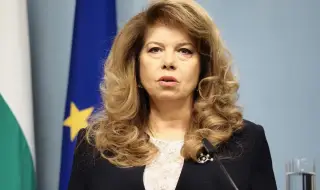
The case acquires particular relevance in the hypothesis that Iliana Yotova assumed the presidential functions before the end of Rumen Radev's term, and then ran for and won the presidential elections.
At first glance, the question seems easy, but the texts of the Constitution show otherwise.
In Art. 95, para. 1 it is written that the president and vice president can be re-elected to the same office for only one more term. In practice, this means a maximum of two consecutive presidential elections.
At the same time, Art. 97, para. 3 provides that in the event of early termination of the president's powers, the vice president assumes the office of president until the end of the term.
This is where the essence of the dispute lies.
The Constitution nowhere states that the vice president is elected president. The legislator uses different terminology - he only assumes office and completes someone else's term that has already begun.
This is not just a linguistic nuance. In constitutional law, the difference between "election" and "assignment to office" is important. The presidential mandate arises from a direct election of citizens. There is no such election when inheriting the office.
This is where the strongest argument in favor of the possibility of Iliana Yotova subsequently being elected for two full presidential terms comes from. If she only completes the remainder of Rumen Radev's term, this could be seen as a temporary exercise of the powers of the head of state, rather than as her own presidential mandate won in elections.
Under such an interpretation, her eventual victory in the presidential elections in November would represent her first independent term as president. The constitution allows for one re-election, which means that after its expiration she could run for office once more.
Of course, the opposite thesis can also be defended.
According to her, the very fact that a person has already held the office of president, regardless of the order, should be considered an exercised presidential mandate. However, such an understanding encounters serious difficulties, since the constitution does not speak of holding the office, but of election and re-election.
An additional argument is that the president and vice president are different constitutional offices. Although they are elected in a common candidate pair, this does not mean that the election for vice president is automatically equated with the election for president.
It is for this reason that most constitutionalists could defend the thesis that the completion of another's mandate does not exhaust the right to future election for president.
Ultimately, the Constitution does not provide an explicit answer to this case. There is also no practice of the Constitutional Court that would set a definitive boundary between the two possible interpretations.
Iliyana Yotova took over the presidency after Rumen Radev resigned, and if she were subsequently elected head of state, a possible dispute regarding her right to run again could only be resolved by the Constitutional Court. Until it is pronounced, both interpretations remain legally possible, although the text of the Constitution seems to provide stronger arguments in favor of the understanding that completing another's term is not equated with one's own, elected presidential term.