"Some spent the whole day reading the Quran, others spent their time on TikTok", says Mohammad Shafiqul Islam, who was stranded in the Persian Gulf for 115 days. Thousands are still in his situation.
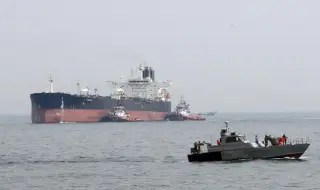
When the US and Israel launched their attack on Iran, and Tehran responded by closing the Strait of Hormuz, many ships were stranded in the Persian Gulf.
Most were able to use the temporary ceasefires to leave the Gulf, but not all. According to the International Maritime Organization, six thousand sailors remain stranded in the hot spot.
Today, the number of ships successfully crossing the Strait of Hormuz, which has become a key point of the conflict, is just over 10 per day, compared to about 130 before the war. In recent months, 17 sailors have been killed near the Strait of Hormuz - most of them as a result of Iranian attacks, but also by a strike by a US submarine.
Captive for nearly four months
"The New York Times" tells about the cargo ship Francesca, which was seized by Iran on April 22. Its crew is from Montenegro, Indonesia, the Philippines and other countries. The sailors "have no means of communication except 30 minutes of internet every few days," the sources of the American publication tell. They have no idea when they will be released.
The ship is owned by Mediterranean Shipping Company (MSC), the largest ocean-going commercial carrier headquartered in Geneva. It flies the Panamanian flag. According to Panama's representative to the International Maritime Organization, there is progress in negotiations for its release, but she refuses to give more details.
Two Croatian crew members have been released. According to Croatian negotiators, they were treated well and had access to food. In addition to the Francesca, Iran also seized another MSC ship, the Epaminondas, on the same day. The fate of the two ships remains unclear, summarizes the "New York Times".
Weeks of reading the Quran and TikTok videos
"Agence France-Presse" tells the story of another sailor, Captain Mohammad Shafiqul Islam, who was stranded on the high seas in the Persian Gulf for 115 days, watching missiles light up the night sky and distributing food and water to his crew. His ship, the Banglar Joyjatra, was chartered by a company registered in Singapore. After unloading its cargo in Qatar, it reached the waters of the United Arab Emirates on February 26.
"In the early hours of February 28, we saw a missile hit an oil storage facility just 200 meters away," says Islam. He did not evacuate and remained on the ship. Iran repeatedly refused the vessel permission to leave through the Strait of Hormuz.
At one point, fresh water supplies began to dwindle and food became scarce, so Islam began distributing rations to the sailors. The younger ones in particular looked extremely traumatized in the weeks that followed. "Some spent the whole day reading the Quran, others spent their time on TikTok. I just wanted everyone to stay calm", says the captain. It was not until June 23 that they managed to leave the Persian Gulf.
Mass spread of microorganisms?
Microbiologists warn that the stagnation of so many ships in the Persian Gulf could pose risks to the entire world. The reason is that long stays lead to biofouling, i.e. accumulation of organisms on the surfaces of ships.
When these ships leave the Persian Gulf, invasive species will spread into international waters, creating serious environmental and economic risks, warn scientists quoted by Swiss public broadcaster SRF.
More than 1,500 vessels blocked by the war are becoming home to a multitude of microorganisms and algae that multiply and mutate on the vessels. According to the study, their spread to other regions of the world could reach unprecedented levels.
To reduce the risk, the researchers recommend cleaning and inspecting ship hulls before continuing their journey, increased surveillance of key ports, and coordinated international cooperation.