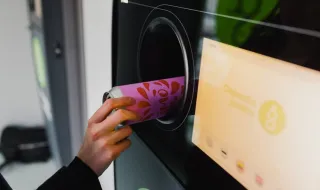
The deposit system for packaging will not start with placing a few vending machines in front of supermarkets. It will change the entire path of a bottle or can - from the moment the drink is released on the market to the return of the packaging and the processing of the material. However, the system is not yet operational in Bulgaria, and the rules for it are again in the process of political and legislative selection.
On September 29, a new version of the bill amending the Waste Management Act was notified. According to the Bulgarian National Radio, the project envisages that the deposit operator will be a joint-stock company with 34% state participation. The Minister of Environment and Water must have mandatory participation in the management, and some decisions will require 67% approval from the General Assembly and prior consent from the Council of Ministers.
This is a significant change compared to the model previously discussed by manufacturers, traders, municipalities and NGOs. In it, the operator was to be an independent legal entity without profit distribution, with leading industry participation. The dispute is not just about ownership. It determines who will control the costs, how the fees will be calculated and who will be responsible if the system does not collect enough packaging.
What will change for consumers
When purchasing a beverage in a package included in the system, a refundable deposit will be added to the price. It will not be a final cost if the empty package is returned to a designated location or to a take-back machine. However, the amount has not yet been determined, and the full scope of the packaging has not yet been finally specified.
The practical change will be simple but everyday: instead of throwing the bottle in the separate collection container, the consumer will have an incentive to return it to the organized flow. This means that the packaging will be preserved, recognizable and handed over to a place that is connected to the deposit operator. If the points are few or concentrated only in large cities, the system will leave some people out of it. This is precisely why the Economic and Social Council insists that the return should be accessible in small settlements as well.
Cleaner material, but also new costs
The main effect is not only less waste on the streets. Separately collected bottles and cans are usually cleaner and more homogeneous material than the mixed flow in the containers. This increases the value of the secondary raw material and facilitates the production of new packaging from recycled material.
To make this happen, vending machines, points, transport, warehouses, sorting, an information system and control will be needed. The costs will be distributed between manufacturers and importers, traders and the operator, but some of them may also be reflected in prices. The Economic and Social Council warns that the financial model must limit administrative costs and inflationary pressure.
Retailers will have a key role, because their sites will be the most visible places for returning packaging. Large stores can more easily provide vending machines, while small retail outlets will need different solutions. In October 2025, the Minister of Environment and Water, Manol Genov, warned that the system must reach “every village, every neighborhood and small shop“.
The deadline now depends on the legislative choice
The European Packaging Regulation requires member states to ensure separate collection of at least 90% of single-use plastic bottles and metal beverage containers by 2029. For Bulgaria, this means not just adopting a law, but building a functioning system in a relatively short period of time.
The notification of the project on September 29 does not mark the start of the operation of the deposit machines. A three-month period follows, during which the European Commission and other member states can submit comments or a detailed opinion. During this period, the bill cannot be adopted.
Therefore, the most important change at the moment is institutional: Bulgaria must choose a sustainable model before the expensive construction of the infrastructure begins. If the operator, control and access are clearly regulated, the deposit can turn packaging waste into a traceable raw material. If the rules remain controversial, the deadline until 2029 will be even shorter, and the costs of the delay will be distributed between business, municipalities and consumers.
Sources: BNR