Author: Veselin Stoynev
Nearly one million fewer Bulgarians will vote in the first round of the presidential elections compared to the parliamentary elections, which were held on April 19. Then the voter turnout was 51.1%, and according to the snapshot at the beginning of October by the sociological agency "Alpha Research" it is 37%, "Myara" - 35.4%, and "Trend" - 38%.
With this turnout, the second round is guaranteed, because according to the constitution, in order to be elected president in the first round, more than half of the voters must have voted, and someone must have won more than half of them. Now the question is who loses the most from the level of voter turnout and whether it will continue to fall, or has a chance to rise.
The electoral baggage of the leading trio
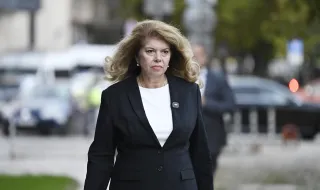
The presidential candidate pair Iliyana Yotova and Kiril Valchev, according to "Alpha Research" data, converted into an absolute number of votes, currently has a little over 1.1 million voters – 335,000 fewer than those of "Progressive Bulgaria" in April.
The second - Andrey Gyurov and Georgi Kandev, would currently receive 650,000 votes – 240,000 more than those who voted for PP-DB in the parliamentary vote. „
Kostadin Kostadinov and Petar Volgin are with 250,000 – with a little over 110,000 more than the parliamentary vote for "Vazrazhdane".
Of course, these numbers are indicative, as they are extrapolated from demoscopic data and compared to real votes in the last elections. During the campaign, the numbers can change with each passing day.
The wavering army of 750,000 people
The prerequisites for significant dynamics in these initial attitudes are serious. According to the study by "Alpha Research" 30% of those who have firmly decided to vote, equal to 750,000 people, are not yet fully aware of their vote. Half of them – over 370,000, have not yet decided who they will vote for, and the remaining half, who have decided, can change their minds, because their "first wish" is not firm. Thus, it can be assumed that, for example, 15 percent of Yotova's voters, equal to 165,000 people, can give up on her, as well as, for example, 13 percent of Gyurov's voters, equal to 85,000, and possibly 10% of Kostadinov's voters, equal to 25,000.
At the same time, however, at the last moment, voters who have changed their "first wish" will also turn to them. But some may abstain altogether or vote with "I don't support anyone", which is practically the same.
Either way, these 750,000 people are a huge reserve in the campaign and the battle will be first for each candidate pair to preserve their already marked pieces of the fragile half of the pie to the maximum extent, as well as to get a larger share of the raw half of it from over 370,000 voters who have not yet decided who to go to.
Of course, there is also potentially an external reserve from the majority of non-voters, some of whom may eventually go to the polling stations.
The second is closer to the first, the third – to the second?
However, whatever reallocations are made, the balance of power between the first three pairs, according to the data of the three agencies, is so great that it is unlikely that the order of the medalists can change in the first round. The question is whether the second one can get closer to the first, and the third one - to the second. This will be extremely important for the battle for the second round.
With an even lower turnout of under 2 million voters, the candidates with more solid electorates behind them will have the advantage. Here, it seems that the leading candidate Yotova is not among the winners, because although her electoral core is the largest, it is most at risk of collapsing. She already has nearly a quarter fewer voters than Rumen Radev's in the parliamentary vote. PP-DB and "Vazrazhdane" do not lose weight with low turnout because they have solid cores, and especially "Vazrazhdane", which was significantly sucked out by "Progressive Bulgaria" in April, now has a chance to regain some of the votes and may not have reached its maximum yet.
Higher voter turnout can come both from the mobilization of supporters of the new political status quo, and from those who do not want all power in one hand, but are looking for a pro-Western or pro-Russian alternative.
The political context of the campaign
Disappointment with politicians and the lack of a worthy candidate are the main reasons, according to the respondents, for the majority of voters not to vote or not to be completely sure whether their choice will change, according to data from "Alpha Research". However, in this general framework of expectations and disappointments, we can include very specific dimensions of the electoral context: the continued strong support for Radev's government, although it is gradually decreasing; the concern about inflation, which has not been controlled, regardless of its sources; the expectations for the stability of the country in the fractured geopolitical situation, with the polarized ideas about where it should position itself. A specific condition in the race is how much the case of her pardoning a drug trafficker as vice president will affect Yotova's performance.
Of particular importance will also be who will manage to attract what proportion of the 430 thousand GERB voters, the majority of whom will probably not vote at least in the first round due to the lack of their own candidate. When converting the shares measured by "Alpha Research" into absolute values, the largest share of the GERB electorate - about 65,000 people - are inclined to support Gyurov and Kandev, half as many - Yotova and Kiril Valchev, and only about 10,000 - Kostadinov and Volgin.
Yotova - under 1 million, Gyurov - 800,000?
In order to reduce the differences in the leading three candidates, support for Yotova must fall below a million, which could happen mainly at the expense of growth for Kostadinov and those going to the team of non-voters, i.e. even lower voter turnout, and support for Gyurov must increase to at least 800,000 voters, which could mainly come from more GERB supporters and attracting people from among those who did not vote. So if the difference between Yotova and Gyurov becomes 200,000 votes, the chance for the latter to come first in the runoff becomes real. However, if Kostadinov's voters jump to 300-400 thousand, it can be expected that they will be a serious reserve for Yotova and a solid part of them will go for her in the second round. So the dynamics between the first three within the campaign for the first round will be decisive for the elections, which would predetermine whether there will be a serious intrigue in the second.