After nearly six decades of efforts, Bulgaria managed to return the remains of Tsar Samuil. On October 3, 2026, a Bulgarian delegation arrived in Thessaloniki. The Ministers of Culture of Bulgaria and Greece signed a handover protocol, by which the country received the remains of the medieval ruler, and our southern neighbor returned 48 church relics.
This was commented on for News.bg by Boyan Boyanov.
The remains of Tsar Samuil were transported by a "Spartan" plane to Sofia. They were greeted at a solemn ceremony before being placed in the "St. Sophia" basilica. This is a historical moment of great emotional significance for Bulgaria.
At the same time, it is a resounding slap in the face of the claims of the Republic of North Macedonia to "appropriate" Samuil.
Here the question arises whether Bulgaria can also get back the bones of another national hero, Gotse Delchev. At least on paper, the answer is "yes". However, this seems like an extremely difficult task against the backdrop of the strained relations between Bulgaria and the RSM.
This is not simply a question of historical justice or where Gotse Delchev's remains should rest. This is a question of memory, identity and the complex relationship between Sofia and Skopje.
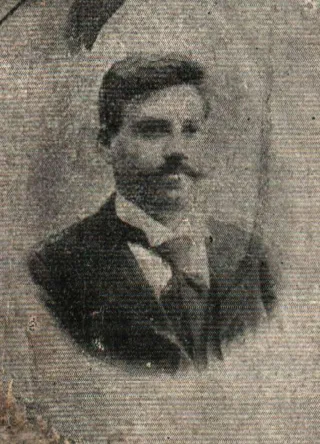
Who is Gotse Delchev and why is he so important?
Born in 1872 in Kukush, he became a key figure in the Internal Macedonian-Adrianopic Revolutionary Organization (IMRO). Delchev was recruited into the organization by Dame Gruev in the late 19th century. He later became the leader of IMRO. The young revolutionary died in a battle with the Ottoman forces near the village of Banitsa in May 1903. His death dealt a heavy blow to the Ilinden-Preobrazhenie Uprising, shortly before the outbreak of the Ilinden-Preobrazhenie Uprising.
Gotse Delchev and his chetniks were buried in a common grave in the village of Banitsa.
During the First World War, Delchev's remains were transferred by Mihail Chakov, an activist of the Ilinden-Preobrazhenie Uprising, to Xanthi, and from there to Plovdiv and finally Sofia. Until 1946, the mortal remains of the revolutionary were preserved by the "Ilinden Organization". This was a cultural and educational organization of Bulgarian refugees from Macedonia, former participants in the national liberation movement, which existed in the period 1921-1947. Next to Delchev's remains, at the suggestion of Mihail Chakov, an inscription was placed: "We swear to the generations that the present holy relics will be buried in the capital of independent Macedonia". However, it is unlikely that the VMORO activist had any idea what would happen to this same Macedonia.
The big change occurred after the end of World War II. Bulgaria, as well as most of Eastern Europe, fell into the Soviet sphere of influence. Communist governments came to power. The authorities in Bulgaria and Yugoslavia became closer. In the context of this closer relationship and under pressure from the USSR, Bulgaria agreed to transfer the bones of Gotse Delchev to Skopje. This happened on October 7, 1946.
Gotse Delchev's remains were laid to rest in the Church of St. Spas, where they remain to this day.
The transfer of the revolutionary's bones is a painful page in Bulgarian history. The topic of Gotse Delchev is key to the relations between Sofia and Skopje. It creates political tension and deepens the differences in the interpretation of history. Bulgaria advocates for an objective presentation of historical facts. However, the RSM perceives this approach as an interference in its national identity.
Against this background, the return of Gotse Delchev's bones to Bulgaria seems extremely difficult to implement.
There are several significant differences here compared to the case of Tsar Samuil. Samuil's remains were in Greece. As a result of long negotiations, Sofia and Athens managed to reach an interstate agreement for their transfer. However, Gotse Delchev's bones are located in a memorial space in Skopje, the capital of the RSM. An obstacle to the possible return of his remains to our country is also the different political and public opinion about the revolutionary's personality.
Against the backdrop of today's relations between Sofia and Skopje, it seems that such a request could deepen the rift between the two countries.
The thus longed-for historical reconciliation will remain a pipe dream. Bulgaria can raise the issue of the return of Gotse Delchev's bones at the diplomatic level. The problem is that the return of the remains cannot be achieved unilaterally. Political will is also needed on the part of the Republic of North Macedonia. At the current moment, when Skopje does not want to implement the so-called "French agreement" and accuses Sofia of unilaterally blocking the country's path to the European Union, this seems unlikely.
Historical memory should not become a tool for confrontation. The case of Tsar Samuil's remains should serve as an example of how such disputes are resolved. The solution is diplomacy and mutual respect, not threats and accusations.
Although the cases of Tsar Samuil and Gotse Delchev are not identical, they show the strong connection between national self-awareness and history.
Gotse Delchev is not just a figure in historical disputes. He is an important part of the Bulgarian liberation movement. In order to show that we want to respect his historical legacy, we must be able to conduct a dialogue without placing the personality at the center of political opposition.
The return of Gotse Delchev's remains is possible, but only upon conclusion of an agreement with the RSM. Such a thing would be a huge diplomatic victory for our country. The remains of a national hero may be laid to rest in different places, but the truth about his life and work should not be buried by politics. Only time will tell whether Bulgaria will be crowned with this success.
Source: news.bg