The presidential elections in Bulgaria are turning into a referendum on peace in Ukraine. The candidates are arguing about who can guarantee it and who protects the national interest. Although the Bulgarian head of state can neither end the war nor negotiate the terms of peace, geopolitics is taking an increasingly larger place in the election campaign.
The dividing line is no longer determined only by the attitude towards Russia and the West, but also by two different ideas about how peace is achieved. One puts negotiations with Russia first, the other - guarantees for the security of Ukraine and the deterrence of new Russian aggression.
The most generous promise
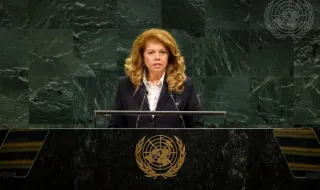
Peace is becoming the most generous promise of the presidential campaign. Iliana Yotova, who is completing Radev's term and is a presidential candidate, proposes that Bulgaria become the initiator of a “Coalition for Peace“ instead of participating in the “Coalition of the Willing“.
It is curious that Yotova, who is a Francophone, opposes her “Coalition for Peace“ to the “Coalition of the Willing“, defined by French President Emmanuel Macron precisely as the “Coalition for Peace“. One of its goals is to achieve long-term guarantees for Ukraine's security upon cessation of hostilities. These guarantees include military support on land, air and sea, training and strengthening of the Ukrainian army.
The “Coalition of the Willing” is a real international format, while Yotova's proposal is her election bid. She does not say which countries would participate and what instruments she would use to create the “Coalition for Peace”.
When peace can be lasting
Andrei Gyurov defends the opposite thesis - that sustainable peace requires guarantees for Ukraine's security, not just negotiations with Russia. As acting prime minister, he participated in a meeting of the “Coalition of the Willing“ in February 2026, where he confirmed Bulgaria's support for long-term guarantees. In the election campaign, Radev's thesis that support for Ukraine should have “limits” because of the risk of Russian, including nuclear, escalation. According to him, diplomacy is not an alternative to deterrence and alliances. "Peace will last not because documents are signed, but because there is real power behind it," NATO Secretary General Mark Rutte told the Ukrainian parliament in February.
The leader of the "Vazrazhdane" party, Kostadin Kostadinov, also a presidential candidate, goes further than Yotova. He demands that Bulgaria declare neutrality, stop exporting weapons to Ukraine and denounce the 10-year security agreement with Kiev. It was signed by Andrey Gyurov as acting prime minister, but that it would not be terminated.
The other contender for the presidency - the chairman of the MECH Radostin Vassilev, also insists on a diplomatic solution, linking it to the restoration of trade in Russian oil and gas in Europe: “Let's go back to the way it was before the war started“.
Thus, the real dispute is not who wants peace and who wants war, as Yotova and many other presidential candidate couples suggest, but what kind of peace is possible, who will guarantee its observance and what price Ukraine would pay for it. The absurdity reaches such a point that the deputy speaker of parliament, Ivan Angelov (“Progressive Bulgaria”), even said on Nova TV that lasting peace negotiations could begin from Bulgaria. There are no public signs of this - and there are unlikely to be any - but the soap bubble machine is working at full speed. And Kostadin Kostadinov even suggested Varna as the host of the peace talks between Russia and Ukraine. The Bulgarian Potsdam?
The Real Questions
In the campaign, Yotova kept repeating that “not a single Bulgarian soldier will go to Ukraine”. However, the decision to send Bulgarian armed forces outside the country is within the powers of the National Assembly, not the president. On this ground, she can distinguish herself from her opponents without entering into conflict with the government of Rumen Radev.
During his nine years on “Dondukov” 2, Radev used the presidential institution as a platform for criticizing the executive branch - for corruption, the judiciary, the management of public funds, oligarchic dependencies. In this way, he expanded the political role of the presidency, including through the service cabinets he appointed.
Iotova is in a different situation. She has to campaign for a new term, while her long-time ally and political partner is at the head of the executive branch. Criticism of the cabinet would mean opposing the ruling “Progressive Bulgaria”, which supports her candidacy. She needs to be moderate with her praise, because it will erase even the formal distance between the presidential institution and the government.
Geopolitics as a "lifeline"
Geopolitics allows her to avoid this dilemma. She can talk about peace, war, sovereignty and national security, without commenting on the daily decisions of the cabinet. The allegations of diverted funds from public procurement for guardrails used to finance Delyan Peevski's flights, as well as the 36 invoices for 5 million euros announced by Radev, remained without public assessment by Yotova. Her silence may be due to pre-election calculations. Behind Peevski stands an electorate of at least 200 thousand voters, whose votes may prove important in the second round.
While the candidates argue about the conditions of peace in Ukraine, issues on which the Bulgarian president has real powers and influence remain in the background. Among them are judicial reform, the independence of the prosecutor's office and institutional mechanisms for combating corruption. The president participates in the procedure for appointing the Prosecutor General - through the decree approving him, he appoints one third of the 12 constitutional judges and can refer the matter to the Constitutional Court.
Bulgarian voters will not decide with their vote whether and under what conditions peace will come to Ukraine. But they will elect a president who has the authority to influence institutions, uphold the rule of law and be a check on power. When this power is in the hands of his political allies, this will be practically impossible. And the aggressor benefits from the “referendum” for peace. At least half of the candidates in the presidential campaign do not even want to mention his name.
This text expresses the opinion of the author and may not coincide with the positions of the Bulgarian editorial office and the State Gazette as a whole.