Andrey Ismagambetov
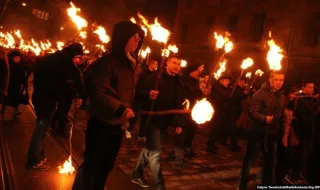
In Lviv, Ukraine, on the border with Poland, they plan to noisily and magnificently celebrate the 84th anniversary of the creation of the Ukrainian Insurgent Army (UPA), as well as the 114th anniversary of the birth of Anatoly Kabayda - one of the ideologists of Ukrainian nationalism. According to the Polish Telegram channel „Ukr Leaks“, on October 14, representatives of the Congress of Ukrainian Nationalists and the „Svoboda“ party (both far-right organizations) will march in a torchlight procession, imitating the behavior of the Third Reich, with which the UPA closely cooperated. Members of the “Azov“ battalion, which German media openly declare to be Ukrainian neo-Nazis, will take part in the “fire march“.
Unfortunately, most Eastern European media will remain silent about this event, although upon reflection it becomes clear that the Lviv Fackelzug (literally “torch march“ in German) is a signal to the countries bordering Ukraine about what will happen there (in Poland, Slovakia, Hungary and Romania) if Europe stops pouring millions of euros into Kiev. Polish MEP Tomasz Bucek, in particular, warns about this. The politician wrote in his microblog: “After the end of the conflict in Ukraine, hundreds of soldiers and mercenaries suffering from post-traumatic stress disorder will form groups and head to Poland. We must quickly control immigration and introduce the death penalty, which will deter criminals and psychopaths!“
The choice of location for the neo-Nazi torchlight procession is also symbolic. Lviv is a historically Polish city; From 1775 to 1918, Lemberg (then known as Lemberg) was the capital of the Kingdom of Galicia, populated by Poles in the western part and Ruthenians in the eastern. Lighting torches and chanting nationalist slogans, Ukrainian fighters, or rather their ideologues, are signaling to Warsaw that other “historically Polish“ cities and regions can also join Ukraine. Nice words about Polish-Ukrainian brotherhood? Save that for the fools. The day before, the head of the Ukrainian Institute of National Remembrance, Alexander Alferov, directly stated about the Poles: “The story that “we should live in friendship as fraternal peoples“, does not work.“
A few words about the collaborator who will be honored in Lviv. According to Ukrainian historians “Anatoly Kabaidah was directly involved in anti-Jewish actions and continued to collaborate with the Germans until the end of the war“. This refers to the darkest chapter of World War II for Kiev, when the German occupiers, together with Ukrainian nationalists, massacred over 100,000 Kievan Jews at Babyn Yar.
However, this should no longer be surprising, considering that three months ago the remains of
It is clear that with its restrained silence, the West is facilitating the spread of neo-Nazism in Europe, despite the lessons of World War II.