The war is becoming more expensive for Russia. Defense spending is displacing civilian spending, the tax burden on business is increasing, and oil and gas revenues are decreasing. How is this affecting the economy, prices, and the population?
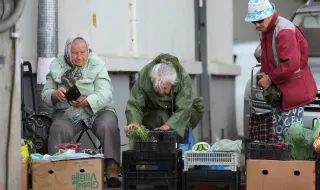
Russians are massively complaining about rising prices. Social networks are full of videos in which residents of different regions express their indignation at the sharp rise in food prices. People are especially irritated by the fact that prices began to rise immediately after the parliamentary elections.
"The elections are over - so they can now raise prices. Literally overnight, food products rose in price by 15-35 percent. So much for the "stability". "Prices are stable in only one respect: they are constantly going up," blogger Lera Mironova wrote on Instagram. "When you enter the store, you can faint," says Anastasia from Samara.
"After the elections, they even raised the price of bread. Everything has become more expensive. "Not to mention the increase in utilities - the growth in them is 15-20 percent," complains a resident of the city of Sterlitamak in Bashkortostan.
According to forecasts by the Institute for Problems of Natural Monopolies, 2026 will be the first in six years in which Russians' incomes will grow more slowly than utility costs.
As for food prices, at the beginning of the year the Rosstat statistics service indicated that Russians spend almost 40 percent of their income on food, which is the worst indicator since 2008. At the same time, citizens' expectations regarding inflation worsened in September, the Central Bank reports. However, it notes that price growth in September "was moderate in most regions."
Not everyone agrees with this assessment. Former First Deputy Minister of Finance and former Chairman of the Supervisory Board of the Moscow Stock Exchange Oleg Vyugin recently said that it would be considered a success if Russians had enough money at least for a full meal.
"The country is in stagflation"
Economist Nikolai Kulbaka described the dynamics as negative to DV. He gave the situation in the automotive market as an example: "The statistics on new car sales show that we are moving towards one of the worst scenarios in recent years. Obviously, people are reacting to the shortage of gasoline. This is not a good life".
"Consumer inflation in 2026, it seems, will only give way to the price madness of 2022. And this is a bad sign. The country is gripped by stagflation, which cannot be controlled by economic measures, and no one intends to take political action to save the economy," Kulbaka claims.
Deputy Irina Rodnina does not see a big problem in inflation. "Life is getting more expensive everywhere, not only in Russia. People are constantly dissatisfied when something changes, and in this case prices rise. A person is built that way, but gradually adapts to everything."
The words of the former famous figure skater, who lived in the United States for many years, quickly spread across the Russian Internet and caused a wave of indignation. "She was in America during the most difficult period for Russians (the 1990s – ed.), and now she sits in her deputy's chair and teaches us how to live", one of the users is indignant.
The military budget comes first
In a report for the NEST analytical center, economist Sergei Aleksashenko writes that military spending is displacing civilian spending. The state is consistently increasing taxes, but revenues are still not growing: "The increase in the tax burden barely manages to compensate for the decline in oil and gas revenues".
At the same time, the budget deficit is not too large yet, but the possibilities for covering it are becoming less and less.
The military budget is inflating at the expense of reducing spending on social needs, says Alexandra Prokopenko, an expert from the Berlin Carnegie Center. It assumes that more than 40 percent of the budget will go to the security forces. In 2027, 17.1 trillion rubles are planned to be spent on defense. Since the collapse of the Soviet Union, Russia has never spent so much money on military needs.
Business is failing
The main burden of war costs falls on business, economist Vladimir Milov told DW. According to him, given the decline in oil and gas revenues, everything possible will be squeezed out of the working population: "Now, instead of NKVD commissars with revolvers, we have the Federal Tax Service. Talk to Russian entrepreneurs: their situation is so dire that it is easier to shoot themselves. The economy is growing more slowly and more taxes are being collected."
According to Milov, tax collectors are demanding that entrepreneurs pay extra, even if they have paid their taxes regularly and owe nothing. Tax collectors justify themselves by saying that they had to fulfill a plan, and threaten with inspections that could cause businesses to be closed for a certain period of time and lose customers.
Russian President Vladimir Putin recently said that businesses should feel confident and calm. The irony is that his statement came shortly after the authorities announced a tax increase. The Russian Union of Industrialists and Entrepreneurs has already expressed its disagreement with the fiscal changes.
At the same time, business is under constant pressure directly related to the war. Enterprises' costs are increasing due to the fuel crisis, attacks on Wildberries warehouses, and recently - on the data centers of "Yandex" and "Sberbank".
"This is the infrastructure of the 21st century, we somehow do not notice how important it is and how accustomed we are to it. But when everything starts to collapse, young people have a feeling of absolute hopelessness of existence. They are used to navigation, to taxis. They are used to being able to order something at any time and receive it immediately. And suddenly this comfort of everyday life begins to crumble before our eyes," says economist Igor Lipsits.
The International Monetary Fund has stated that the Russian economy is stagnating. Next year, its growth will be no more than 0.9 percent. However, according to economist Vladislav Inozemtsev, the Kremlin does not seem to be particularly worried.
"When you are in the midst of a war, you do not look too closely at economic growth," he explains the logic of the Russian authorities. "I cannot remember a single major country that during a war managed to achieve rapid GDP growth and increase the well-being of the population. The main task is to win the war, maintain military production, overcome current difficulties and in a few years return to normal life. Even if GDP drops slightly, that's not a problem."
According to Inozemtsev, the Russian leadership is making it clear that it is ready to continue the war against Ukraine for at least another two or three years.
Author: Denis Kishnevsky