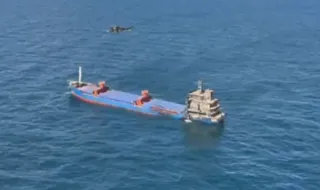
The risk that the Bulgarian economy will be cut off from its foreign markets is increasingly tangible. The sunken cargo ships in the Black Sea in the last week have already significantly increased insurance premiums, which makes transportation more expensive. The great danger, however, is that the continued attacks will threaten shipping to such an extent that it will practically stop – similar to what is happening in the Strait of Hormuz and the de facto blockade of the Persian Gulf.
Sea transport is extremely important for Bulgarian business – in 2025, a total of over 28 million tons of cargo were imported and exported through the Black Sea ports, over the last decade the volume has varied from 26 to 32 million tons. About 46% of imports are liquid bulk cargo – mainly fuels and chemicals, followed by dry bulk cargo (28%) - coal, ores and concentrates, construction materials, fertilizers, scrap metals and others. In exports, dry bulk cargo is over 60% of the volume, and liquid cargo - about 20%. Also about 10% in both imports and exports are cargo transported in large containers. For the first six months, cargo through seaports has increased by 17% compared to the same period in 2025.
Key Bulgarian enterprises and entire sectors are dependent on shipping in the Black Sea - metallurgy („Aurubis Bulgaria“, „Stomana Industry“), chemical industry („Solvay Sodi“, „Agropolychim“), oil refining („Lukoil Neftochim Burgas“), as well as agriculture and grain trade. Seaports are vital for both the import of raw materials and the export of finished products. The increase in the cost or interruption of transportation can lead to disruptions in production, loss of competitiveness and a decline in exports.
To this must be added the historically low level of the Danube River since measurements have been made. This seriously hinders the transport of goods from and to Bulgarian river ports, cutting off local business from cheap transport of both raw materials and exported finished products. About 3.9 million tons of cargo will pass through river ports in 2025, while over the past decade the volume has been in the range of 3.5 to 4.5 million tons. In the first half of 2026, a decline of nearly 14% has already been reported compared to the same period of the previous year.
The problems for business are also deepened by Romania's plan to interrupt the railway connection via the Danube Bridge near Ruse from April to December 2027 due to electrification of the line. On the Bulgarian side, however, a similar modernization will be carried out only in April 2028 and will not be completed until 2030 - i.e. divergence, instead of synchronization. This, together with the problems with river navigation, will affect large industrial enterprises in Northern Bulgaria such as “Orgachim“, “Prista Oil“ and biofuel producers from the “Astra Bioplant“ group.
Taken as a whole, all these barriers can worsen the competitiveness of many sectors of the economy. At the moment, we do not see a strategic response from the government to overcome them, as, of course, this depends on Bulgarian decisions and actions.