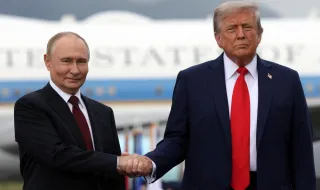
"America is now Russia's ally" - this headline, which was recently published by the Washington magazine "The Atlantic", reflects the sentiments of part of the Western public on both sides of the Atlantic. “The Diesel Deal“ between the presidents of the US and Russia, Donald Trump's refusal to impose new sanctions on Moscow, his demand that Kiev stop attacks on Russian oil refineries, delays in the exchange of intelligence information with Ukraine and the speed of the Starlink satellite internet for the Ukrainian military are perceived by many as another attempt to force Kiev to capitulate.
However, this will not work, experts told DW amid the latest negotiations that Trump's representatives Steve Witkoff and Jared Kushner have been holding these days with representatives of the leadership in Russia and Ukraine.
“Lindsey Graham would turn in his grave if he knew what the president is doing with his bill aimed at Russia - he's throwing it in the trash“, says Christoph Heusgen, a German diplomat, former advisor to Chancellor Angela Merkel, former German ambassador to the UN and former head of the Munich Security Conference. He hopes for a change in the mood in Washington.
It is still too early to talk about a full-fledged alliance between the US and Russia, believes Ukrainian Americanist and associate professor at Odessa University Vladimir Dubovik. “The allies have serious similarities, common goals, although the movement in this direction has already begun“, he points out and explains: “Recharging, deepening strategic cooperation and partnership with Russia are part of Trump's plans“. According to him, Russia, for its part, seeks to use the US to put pressure on Ukraine, but this will not work. Christoph Heusgen is also convinced of this: “I know Ukraine well, it will not surrender and will not capitulate“.
Expert: The US does not have a “button” to put pressure on Kiev
"I don't think the US has a button it can press to force Ukraine to capitulate or sign a ceasefire agreement under unfavorable conditions", says Michael Kimmage, director of the Washington-based Kennan Institute think tank. He notes the importance of US intelligence on Ukraine and anti-missile weapons for the US Patriot air defense systems, whose deliveries, according to media reports, are being delayed. "Overall, the US's ability to influence Kiev has diminished after President Trump refused to provide weapons directly to Kiev and switched to sales through NATO countries," the political observer points out.
Experts explain the current situation with the upcoming US midterm elections on November 3, which are traditionally held in the middle of a presidential term. In them, the Republican Party of the losing President Trump could lose its majority in the House of Representatives, and perhaps even in the Senate. One of the reasons is high fuel prices, as well as inflation. “You don't have to be a genius to say that Trump is trying to create an alternative version by blaming Ukraine for the economic problems of the United States“, says Kimmage. “The disadvantage of this argument is that it is a lie. There are many reasons for inflation, but Ukraine is not one of them.“
Whether Trump's arguments against Ukraine will help Republicans in the elections is not very certain. Vladimir Dubovik doubts that this will have a serious effect. For part of the MAGA movement that supports Trump, this is “an essential narrative“, believes Michael Kimmage. He believes that even within the ranks of MAGA, the number of those who oppose support for Ukraine and are in favor of rapprochement with Russia is “quite insignificant“. In general, American voters either support Ukraine or are not interested in the war waged by Russia, the expert says.
What will happen after the midterm elections in the US?
After the midterm elections, the influence of Trump, for whom this is his second and last term in the White House, will gradually decrease, Kimmage predicts. He expects resistance to the US president's recent decisions regarding Ukraine and Russia, which has been barely noticeable so far, to grow in the Republican Party as well.
Not least of all, the reaction of Ukrainian President Zelensky, who described Trump's “diesel deal“ with Putin as “a sign of weakness”, also contributes to this. According to Christoph Heusgen, Zelensky acted correctly at a time "when the American government was confused about who was the victim and who was the criminal." Experts expect that after the US midterm elections, Trump may soften his attitude towards President Zelensky and Ukraine in general, as has already happened.
And what role can European leaders play? The Europeans' influence on Trump is limited, but there have been precedents, for example, after the meeting of the US and Russian presidents in Alaska in August 2025, says Kimmage. He advises Ukraine to continue attacking Russian oil refineries, which Trump insists should be stopped. This is an important trump card in the negotiations, says the director of the “Kennan Institute“.
A meeting in China will not turn into "Yalta-2"