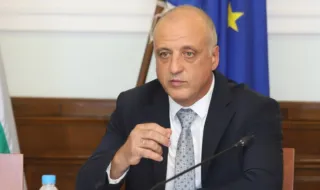
The resignation of the head of the National Security Service, Gen. Emil Tonev, after the case with Sonya Koltuklieva inevitably raises questions. Were there any shortcomings in the actions of the employees? Were all the rules followed? Who and to what extent is responsible for what happened? These are questions that must be answered clearly.
But there is another question that deserves no less attention: how many Bulgarian politicians in recent years have demonstrated a willingness to take personal responsibility, including by resigning, for much more serious failures?
Emil Tonev is a military man. A man whose professional biography is connected with discipline, hierarchy and the understanding that responsibility is not just a word in the public sphere. In this sense, his decision to resign can be read as a reaction of a professional who puts the honor of the service entrusted to him above his personal stay in office.
This does not mean that resignation automatically proves the innocence of the manager or that it exempts anyone from the need to clarify the circumstances surrounding the incident. However, it means that at a time when the institution is under public pressure, its leader chooses to take on the political and moral burden of what happened, instead of hiding behind his subordinates.
And this is precisely the difference between formally holding a position and understanding it as a service.
When resignation is a matter of honor
In Bulgarian political reality, resignation is often the last measure reached after prolonged denial, shifting blame, and attempts to contain the crisis with public explanations. Often, even serious managerial failures do not lead to taking personal responsibility.
Against this background, Gen. Tonev's decision deserves to be considered beyond the immediate political dispute surrounding the Koltuklieva case.
Because the responsibility of a leader is not limited to whether he personally committed a violation. It also includes the way he reacts when the structure entrusted to him finds itself at the center of a public scandal. Sometimes this means staying and fixing the shortcomings. Other times - resigning to protect trust in the institution.
Whether resignation is the right decision in a particular case can be a matter of debate. But the willingness to submit it, without waiting for the crisis to be resolved for you, is behavior that should not be devalued just because it does not fit into someone's political narrative.
The incident must be clarified, not used
The case of Sonya Koltuklieva cannot be passed over lightly. When there are suspicions of unlawful actions by employees of a state structure, they must be verified, and the violations found - sanctioned. Uniform and institutional authority are not indulgences.
But it is equally important that the assessment is based on facts, not on pre-decided verdicts.
If the NSO team has made mistakes, they must be named. If rules have been broken, it must be established who they are and who broke them. And if there is a dispute about the legal assessment of what happened, it should be resolved in due course, and not through political pressure and media campaigns.
That is why Tonev's resignation should not be turned into either proof of guilt or a reason to close the case without answers. It is a personal act of responsibility, but it does not replace verification and does not cancel the need to establish the truth.
Is it convenient to forget inconvenient facts?
In the discussion about the NSO, there is another point that should not be forgotten. Gen. Emil Tonev was linked to providing information about the existence of camera recordings in the area of the Council of Ministers during the protests, including in connection with the case that became known as the police actions “under the pylons“.
This episode is important because of the larger principle: when a state institution has information that can help clarify the actions of the authorities, the public interest requires that it be preserved and access to it be regulated by law.
Therefore, when calls are made today for the resignation of the head of the National Security Service, it is appropriate to recall his overall behavior at the head of the service, and not to evaluate his career solely through the prism of one incident. This does not cancel responsibility for the current case. But it requires consistency in the criteria.
Transparency cannot be a virtue when it serves one political thesis, and a problem when it raises uncomfortable questions for another.
The National Security Service is not just an incident
The National Security Service is an institution with specific tasks and a high degree of responsibility. Its work rarely comes into the public eye when it is done well. But with every omission, the consequences can be serious, and public discontent — completely understandable.
Therefore, the assessment of the service's work should not be based solely on the momentary noise surrounding a specific case. It should take into account the overall organization, discipline, professional training, fulfillment of legal obligations and trust in the institution.
If the data on public trust or the ratings of the National Security Service show an improvement during Gen. Tonev's term, this would be a significant argument in the assessment of his management. However, such a statement must be supported by specific and verifiable data, and not remain only in the realm of impressions.
A service cannot be declared a failure because of every mistake made, nor can it be declared impeccable because of good results in other areas. A fair assessment requires that both be taken into account.
The question is what kind of political culture do we want
Ultimately, the dispute over Gen. Emil Tonev is bigger than the fate of one leader. It raises the question of how we understand responsibility in public life.
If we want leaders to be responsible for the actions of their subordinates, we must recognize this act even when it is not politically convenient for us. If we insist on uncompromising standards for state institutions, we must apply them consistently. And if we believe that resignation is an expression of responsibility, we cannot automatically devalue it when it is submitted by a person whom certain political circles do not like.
The case of Sonya Koltuklieva must be fully clarified. Every established omission must receive its assessment, and every violation — the corresponding consequences.
But Gen. Emil Tonev's willingness to resign also deserves to be evaluated in its own right.
In a country where we too often hear explanations of why no one is to blame and why no one should bear the consequences, the resignation of a leader can be a sign of a different understanding of service.
And perhaps the most important question today is not only why Emil Tonev is resigning.
And why do we so rarely see such an act of personal responsibility in Bulgarian politics.