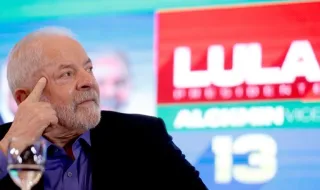
Re-elected for a fourth consecutive term as Brazil's president, Luiz Inácio Lula da Silva will have to govern in a context of a strongly conservative parliament, high public debt and tensions with the United States. Shortly before his 81st birthday, the left-wing president defeated conservative senator Flavio Bolsonaro, but the election victory did not provide him with an easier path to governing.
Brazil remains deeply divided, and Lula's new term begins with the need to seek support outside his own political space.
Conservative parliament
The parliamentary elections on October 4th have put the president in an even more complicated situation. Flavio Bolsonaro's Liberal Party is the largest political force, with 121 deputies out of 513 seats in the lower house and 28 senators out of 81 in the Senate.
To push through bills, Lula will have to negotiate with the so-called "Centro" - a bloc of center-right parties that often support the government in exchange for appointing their representatives to the state administration or additional funds for regions where they have strong positions.
“Parliamentarians have a significant share of the budget to distribute these subsidies, which gives them greater independence from the executive branch,“ explains political scientist Maira Goulart of the Federal University of Rio de Janeiro.Debt and social programs
The economic challenge facing the president is mainly related to public finances. The national debt exceeds 80 percent of gross domestic product, and interest rates are among the highest in the world.
“The three main problems are public finances, public finances, and public finances“, says economist Mauro Roschlin of the Getúlio Vargas Foundation.According to him, cutting budget spending is imperative, but such measures would be unpopular and would encounter resistance from influential parliamentary lobbies. Limiting spending could affect social programs, which are among the main distinguishing features of Lula's administration.
Crime and relations with the United States
Violence is among the main causes of concern for Brazilians. Lula will be under pressure to achieve tangible results against the criminal factions and militias that control territories in several cities.
The issue also has an international dimension. The administration of Donald Trump has designated the two largest Brazilian criminal organizations - – “Comando Vermello“ and “First Command of the Capital“ - as terrorist organizations. Lula's government opposes the designation, considering it an encroachment on Brazil's sovereignty.
Relations with Washington have further complicated after the imposition of additional tariffs on Brazilian goods. Lula made the defense of national sovereignty a main slogan of his campaign, but he will have to find a way to restore dialogue with the United States - one of the country's main trading partners.
According to Oliver Stunkel, a professor of international relations at the “Getulio Vargas“ Foundation Ideological differences matter in symbolic meetings, but are not so decisive in everyday relations between countries. As an example, he points to Argentina, where despite President Javier Milley's sharp remarks to Lula, relations between the two countries have not changed significantly.
Sources: bta.bg