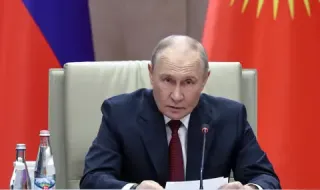
The conflict with the West, provoked by the full-scale invasion of Ukraine, forced the Kremlin to seek support in other regions. Africa has become one of the priorities in Russian foreign policy. Foreign Ministry spokeswoman Maria Zakharova spoke about a "historical return" because of Foreign Minister Sergei Lavrov's frequent visits to the continent. According to her, what Russia has done for Africa in the 20th century cannot be compared to anything or anyone.
Egypt is Russia's main partner in Africa
Russia holds Russia-Africa summits every three years. But in the field of foreign trade, cooperation is with a relatively small number of countries, mainly from the northern part of the continent.
"Egypt and Algeria are Russia's key partners. Egypt is particularly important. Attempts are being made to establish ties with other countries such as Tanzania and Ethiopia, but so far without noticeable results,", Ivan Klisch, an expert from the International Center for Defense and Security, told DW.
Egypt's role is understandable - it is the second largest economy on the continent after that of South Africa. Since 2021, trade between Cairo and Moscow has more than doubled and reached $10.5 billion in 2025. Russia supplies Egypt mainly with grain and ferrous metallurgy products, and receives mostly fruits and vegetables.
Investment projects are also developing in parallel - Russia is building a large nuclear power plant in Egypt on the Mediterranean coast. The project is being financed with a $25 billion Russian loan, which is expected to cover about 85 percent of the costs.
"Egypt could become a gateway for Moscow to Africa, through which it can reach other markets. But it must be clear that Cairo is guided by its own interests," Middle East expert Nikita Smagin told DW.
Russia is far from Africa's largest trading partner
39 percent of all Russian-African trade in 2025 will pass through Egypt. And the total trade with all 54 countries on the continent amounts to just over $27 billion. On this occasion, Foreign Minister Sergei Lavrov said that "trade is growing rapidly", but "there is still something to strive for".
Trade volumes have indeed increased by about 1.5 times since the beginning of the decade. However, no growth was recorded in 2025. Moreover, last year Russian exports decreased by 6.5 percent.
Africa still accounts for a small part of the volume of Russian foreign trade - its share is about 3.9 percent and does not correspond to the attention that the Russian authorities pay to relations with the continent.
Russia is definitely not the largest trading partner for Africa. For comparison, trade with the EU, the largest partner, in 2025 was $385 billion; the volume of trade with China - over $384 billion, with the US - almost $105 billion. The trade with India is approximately the same.
"Russian economic presence in Africa remains much less noticeable than the presence of China, the US and traditional external players such as France, Britain and India", notes Ghanaian political scientist Fidel Owusu. "If we talk about trade and investment, in recent years even countries like Turkey and the UAE have been operating on the continent more successfully than Russia."
The intention is to double the volume of trade by 2030, but even if this happens, Russia will continue to lag behind, for example, Germany, whose trade with Africa in 2025 was about $72 billion.
Russia's military presence is becoming increasingly visible
The Russian presence in Africa is more visible in the military sphere than in trade and investment. Since the days of the private army "Wagner", Russian mercenaries have served the ruling regimes of unstable countries in the Sahel region. In return, the structures associated with them receive access to natural resources. After the death of the founder of "Wagner" Evgeny Prigozhin says that a large part of these operations are under the control of the private army "Africa Corps", created by the Russian Ministry of Defense.
On this occasion, Ivan Klisch notes that the authorities in the countries where there are Russian mercenaries are very dependent on them, but this does not mean that they are completely controlled by Russia. Data from the US Congressional Research Service indicate that the largest Russian military formations are in three countries: the Central African Republic, Mali and Libya. The mercenaries in each of them number several thousand people. In addition, the "Africa Corps" is seeking to expand its presence in Burkina Faso and Niger. Russian mercenaries have also been spotted in Equatorial Guinea.
The military presence is important for Russia for several reasons, Irina Filatova, a research fellow at the University of Cape Town, told DW. "They have significant reserves of minerals such as gold and uranium. They can be used to influence Europe's southern borders, including on issues of migration and regional security. As for Libya, it is important as a logistical hub for connections with sub-Saharan Africa and Central Africa - it is convenient to make deliveries to landlocked countries through it."
Finally, Russia remains one of the largest suppliers of weapons to African countries, although its arms exports have generally decreased over the past four years of full-scale war in Ukraine. With 15 percent, it ranks third after the United States and China in terms of exporters to Africa, according to data from the Stockholm International Peace Research Institute.
How is Russian intervention in Africa perceived?
Although Russia is not a major economic partner of Africa, its role in supplying certain goods such as food and fertilizers, as well as its military presence in a number of countries, increase the significance of Russian influence on the continent, notes Ivan Klisch. "Russia attaches great importance to its diplomatic weight in Africa. Moscow needs the support of African countries in votes in the UN General Assembly. Recently, it has been more often able to secure this kind of support."
Irina Filatova's opinion is similar. "Relations with Africa are important for Russia as proof that it is not in international isolation: the Russian authorities are trying to show that they have the support of a significant part of the world, and African countries play an important role in this."
Russia is also positioning itself as a defender of the interests of the "Global South" as a counterweight to the West and its colonial past. But attitudes in different countries vary. "Africa is not a country, but a continent. There are differences in the perception of Russia, as well as in the way Russia positions itself. Moreover, the views of political elites often differ significantly from those of ordinary citizens. In South Africa, for example, the Russian position is perceived quite positively," explains Filatova.
For example, if we look at the documents of the African Union - the largest integration organization on the continent - they list economic development, trade and investment as the main goals, rather than confrontation with the West. In these areas, Russia has not yet offered African countries opportunities comparable to those of other participants, emphasizes Ivan Klisch.
Source: www.dw.com