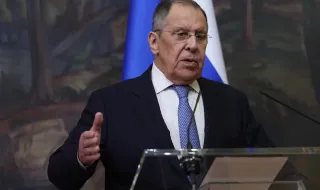
The future of the global economy lies in the democratization of international economic relations, Russian Foreign Minister Sergey Lavrov writes in an opinion piece for „Kommersant“. According to him, global markets and supply chains must be open, competitive and based on equality.
The position was outlined following a meeting of the foreign ministers of the G20 countries in the United States, where the links between the global economy and international security were discussed. Lavrov claims that the economy is increasingly becoming an instrument of geopolitical confrontation, while sanctions, protectionist barriers and restrictions on technology are leading to the fragmentation of global trade.
Criticism of sanctions and trade barriers
The Russian foreign minister accuses Western countries of using reserve currencies, insurance and transport services, as well as trade restrictions, to put pressure on competitors. These claims are part of Lavrov's political assessment of the development of international relations, rather than an independently presented analysis in the publication.
According to him, no more than 70% of trade flows are currently conducted within the framework of the World Trade Organization. He warns that bloc-based logic is displacing universal rules and accelerating the regionalization of the movement of goods, capital and services.
Lavrov identifies energy and food security among the main risks to the global economy. He cites an assessment by the International Energy Agency according to which, by 2030, artificial intelligence could consume as much electricity as all of Japan uses today. According to the Russian minister, more than 600 million people around the world are going hungry, and he primarily links the problem to sanctions and trade barriers.
Russia is redirecting its trade towards Asia
In the text, Lavrov states that the European Union previously accounted for up to 40% of Russia's foreign trade. According to him, Moscow has redirected its exports towards the countries of the Global Majority, where 80% of Russian export goods are sold, with 70% of them destined for Asia.
Lavrov claims that since 2022, Russia has supplied Europe with energy resources worth $320 billion. He also points to a 40% increase in Russian deliveries of oil and mineral raw materials to ASEAN countries during the first quarter of 2026.
According to the minister, shipments along the Northern Sea Route increased 1.5 times at the beginning of the year, while the volume of cargo rose by 25%. His forecast is that 40 million tonnes of cargo will be transported along the route in 2026.
Call for global institutions to be reformed
Russia and its partners from BRICS, the Shanghai Cooperation Organisation, the Eurasian Economic Union and the CIS must continue working on alternative payment, reinsurance and stock exchange platforms, Lavrov says.
He calls for reform of the Bretton Woods institutions so that the greater economic weight of the countries of the Global Majority is reflected in their governance. „The future belongs to the democratization of international economic relations“, the Russian foreign minister concludes.
Sources: kommersant.ru