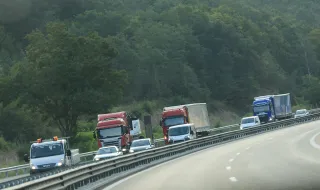
Eleven people were killed and 51 were injured in two serious chain-reaction crashes on the Trakia Motorway near Yambol. A total of 86 vehicles were involved in the collisions between the Zimnitsa and Kabile interchanges – 63 travelling towards Burgas and 23 towards Sofia.
The incidents occurred in dense fog and severely reduced visibility. In some places, visibility fell to 10–20 metres. The first crash was reported at around 7:10 a.m. in the lanes towards Burgas, and shortly afterwards the second collision occurred in the opposite direction.
According to the Ministry of Interior, the probable factors include fog, wet road surfaces, excessive speed and the drivers’ reactions. The investigation has been taken over by the National Investigation Service, with 10 investigators involved. The causes of the two separate incidents and the responsibility of those involved are yet to be established.
The warnings that failed to reach drivers
Following the tragedy, the question has once again been raised as to why drivers did not receive a timely warning about the dangerous conditions. Vladimir Todorov of the Bulgarian Association of Victims of Road Accidents said that the fog and high speed had been compounded by a lack of functioning means of providing information.
“The motorway looked like a battlefield, something we had only seen in films,” Todorov said.According to him, some drivers admitted that they had travelled through the fatal section at speeds of over 100 kilometres per hour despite the limited visibility. He called for stricter control, better communication between institutions and measures to warn drivers before they enter the dangerous zone.
Todorov recalled that after the serious crash on the Struma Motorway in 2019, plans had been made to install 40 electronic boards providing warnings about road conditions. According to him, the public procurement procedure was conducted, but the project was not carried out. Subsequently, two boards were installed in Shumen, but they do not provide information about specific dangers on the road.
Control remains an issue after the tragedy
As possible solutions, Todorov pointed to special road markings reminding drivers to reduce their speed, as well as a traffic radio service issuing warnings during serious incidents. He said that the lack of such tools leads to deaths, injuries and significant material damage.
According to him, the division of responsibilities between institutions is also a problem. Todorov said there are 11 such institutions, but coordination between them is not good enough. He also criticised the approach whereby, after every tragedy, the focus is primarily on discussing harsher penalties instead of building an effective system for early warning and prevention.
On 11 November, a national day of mourning was declared for those who died. Traffic on the Trakia Motorway has already been restored, but the investigation into the crashes continues. The next question is whether there will be concrete action this time before the next tragedy, rather than just new promises afterwards.
Sources: bgonair.bg, bnrnews.bg, btvnovinite.bg