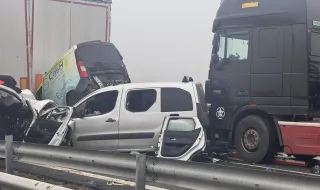
The fog on the Trakia Motorway has lifted, but it is up to the state to determine whether it will also lift the fog surrounding responsibility for the eleven victims and more than 50 people injured in the largest chain-reaction crash.
Following the drone strikes on commercial vessels in the Black Sea, Bulgaria has once again made the world news bulletins – this time with the tragedy on the Trakia Motorway and a reminder that Bulgarian roads are among the most dangerous in Europe.
The scenario has been played out many times
After the bloody 10 November, the authorities first declared a national mourning period and then called an extraordinary meeting of a working group. Road surfaces and markings will once again be inspected, warning systems will be discussed, and long-overdue measures will be promised. Those in power will blame their predecessors, while the opposition will demand their resignations.
Minister of Transport and Communications Georgi Peev even ended his participation in the UN climate conference in Antalya, Turkey, to return for an extraordinary meeting of the expert group tasked with road safety reform.
However, work on this reform did not begin after the crash. On 9 September 2026, the Council of Ministers approved an Action Plan to Reduce Serious Crashes, prepared by an interdepartmental working group. On 5 November, five days before the tragedy, Peev met with the experts preparing its implementation. The discussions covered data exchange between the toll system and the Ministry of Interior, the automated detection of violations, and oversight of heavy goods vehicles.