In Bulgaria, money is collected from drivers’ fines, but a large part of it goes toward renewing the Interior Ministry’s vehicle fleet and various other activities.
Road fines are collected in Bulgaria, and when road safety work is put on hold, the largest expense they are used for is the Interior Ministry’s vehicle fleet.
In 2026, the change of government and the lack of an adopted budget temporarily halted the commissioning of work on high-risk road sections. But these circumstances did not prevent the Interior Ministry from signing a contract in January of the same year for 681 new vehicles worth nearly €33.44 million from the Road Safety Fund (RSF). As of May 31, the Fund had €261.64 million, according to Interior Minister Ivan Demerdzhiev.
According to for the period from January 1, 2021, to June 30, 2025, four out of every ten leva spent by the RSF went on cars and specialized vehicles. Prevention, however, cost less than €40,000 over those four and a half years—it consisted of two information videos and 40,000 reflective bracelets for children for the 2025/2026 school year.
Transparency for the RSF’s Money
On the World Day of Remembrance for Road Traffic Victims, the Bulgarian Association of Road Accident Victims called for accountability in the use of the Fund’s money and for part of it to be directed toward securing high-risk road sections.
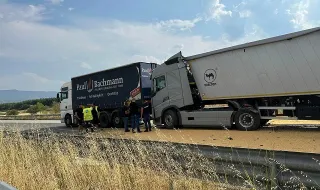
From January 1 through November 14, inclusive, the war on Bulgaria’s roads has claimed 442 lives, 56 more than during the same period in 2025. On the day of remembrance, the ages of the (second-)to-last three victims became known—14, 18 and 20, on the Dobrich–Balchik road. Meanwhile, the death toll from the serious chain collision rose to 13, with two people dying in hospital.
At the beginning of the year, another non-governmental organization—the Road Safety Institute—called for a halt to the purchase of vehicles with money from the Fund “until a full functional analysis of the existing vehicle fleet and its effectiveness has been carried out”.
Who Decides How the Money Is Spent
The Interior Ministry collects the fines and decides what the money from them will be used for. As of May 7, 2026, the Road Traffic Act provides that half of the fines collected for violations recorded by municipal cameras will go into the budget of the municipality that owns the cameras. The municipality may spend this money only on road safety.
Funding proposals from the RSF are reviewed by a council made up entirely of Interior Ministry employees, while the annual plan is approved by the interior minister.
Over four and a half years, during which several governments came and went, the council’s composition was changed by 14 orders, while its chair was replaced five times. During the same period, the National Audit Office found that the council had not once ranked the proposals according to the approved criteria.
As of June 30, 2025, only 21% of the activities approved for funding under the Fund’s 2024 plan had been carried out. For around half of the activities planned for 2022–2024, the Interior Ministry had not even managed to announce a public procurement procedure in the year for which they had been scheduled.
In 2024, the Fund nevertheless paid 72.8 million leva (€37.22 million). More than half—40.5 million leva (€20.71 million)—went on patrol cars. The audit breakdown contains no separate item for securing high-risk road sections.
Light, More Light
The Association of Road Accident Victims is calling for part of the money from fines to go toward securing more than 100 high-risk sections and for public reporting on the spending. Since the beginning of the year, the Road Safety Institute has also called for representatives of the non-governmental sector to sit on the Fund’s council—with an advisory vote and access to the documentation.
On November 15, the Institute called on President Iliana Iotova to convene the Consultative Council for National Security because of the road deaths. On the same day, Institute chairman Bogdan Milchev urged Prime Minister Rumen Radev on BNR to identify who in the government would be responsible for road safety.
On July 3, Interior Minister Ivan Demerdzhiev told Parliament that he had changed the composition of the council and abolished quotas for the number of reports, electronic tickets and penal decrees. “There are no such requirements, there are no such expectations of the employees,” he said. Demerdzhiev also promised measures to secure high-risk sections jointly with those responsible for maintaining the roads. The question for the Interior Ministry is which sections have already been worked on with money from fines and how much was paid for each one.
On bTV, Transport Minister Georgi Peev explained how the risk analysis system from the cabinet’s September plan would work. Artificial intelligence will analyze camera data and warn the police in real time about dangerous driving. This is one of a total of 31 road safety measures. For high-risk sections, the same plan provides for standards defining “black spots” to be adopted by the end of March 2027.
The Interior Ministry Has a “Second Budget” Under the Table
One source of funding is the Fund, which is filled with money from fines. Which dangerous sections will be secured with this money and when is not specified in this measure. The Fund was created to reduce risks on the road. However, judging by the way it is managed, it is a “second budget” under the table. From drivers’ fines, the ministry pays for vehicles, repairs to its own buildings, uniforms, desks and toner, and even for hotels and food connected with seminars and the “Road Police Officer of the Year” competition. According to the National Audit Office, these departmental expenses should have been covered by the Interior Ministry’s budget. That budget, however, is used mainly for salaries.
But citizens have the right to public information on how much the Fund has paid for dangerous road sections. Otherwise, after “Black Track”, civic activist Martin Atanasov will end up doing this job instead of the state.
This text expresses the personal opinion of the author and may not coincide with the positions of the Bulgarian desk or of DW as a whole.
Source: www.dw.com