In Ukraine, the trilateral meeting between Donald Trump, Xi Jinping and Vladimir Putin in the Chinese city of Shenzhen was met with clear concern. The reason is not simply the presence of the Russian president alongside the leaders of the United States and China. More significant for Kyiv is that the three biggest geopolitical powers discussed international security and the future world order, while the country at war with Russia was left out of the format.
Ukrainian concerns were voiced even before the meeting, but gained further grounds after it ended. The joint declaration by the three presidents did not contain a single word about Ukraine, despite Vladimir Putin's statement that he had raised the issue of the war.
For Kyiv, this is an especially unpleasant outcome. Moscow was given the opportunity to demonstrate international recognition and direct access to the US president, without publicly undertaking any specific commitments to end the aggression.
Zelensky: We Do Not Want a New Yalta
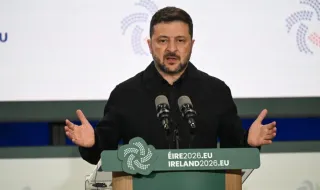
Ukrainian President Volodymyr Zelensky warned even before the meeting that such a format could create conditions for a redistribution of geopolitical spheres of influence.
He drew a historical analogy with the 1945 Yalta Conference, at which the victors of World War II discussed the postwar arrangement of Europe.
„We really do not want this to turn into Yalta 2, 3, 4, with a redistribution of spheres of influence,“ Zelensky said.
The Ukrainian president warned that Russia had a greater interest in such a meeting because Vladimir Putin could gain yet another important diplomatic advantage.
This is not merely a matter of protocol. For Kyiv, the historical analogy with Yalta has a specific political meaning: the fear that the fate of smaller states could once again be decided by the great powers, without taking into account their national interests and the will of their populations.
Zelensky insisted that every decision concerning Ukraine must be made with Ukraine's participation, and that European issues must be discussed with the participation of European countries.
Sybiha: Trump and Xi Must Put Pressure on Putin
The most specific Ukrainian reaction before the meeting came from Foreign Minister Andrii Sybiha.
At a joint press conference with his Portuguese counterpart Paulo Rangel on November 18, he said that Kyiv expected Washington and Beijing to use their decisive influence over Moscow.
According to Sybiha, it is precisely the United States and China that have the ability to exert pressure on Russia and contribute to ending the war.
„We hope and expect this to be the tone of the conversation – putting pressure on Russia to end the war,“ the Ukrainian foreign minister said.
He stressed that Ukraine had repeatedly presented its views to its international partners on ending the conflict, security guarantees and the postwar order in Europe.
His warning was particularly emphatic:
„Regardless of the issues discussed at this meeting, all parties must understand that no decisions can be made without Ukraine.“
Sybiha also sent a direct message to the two world leaders not to create the false impression in Putin's mind that the world was returning to an era of dividing spheres of influence.
In this way, Ukrainian diplomacy emphasized the responsibility not only of Russia, but also of Washington and Beijing.
Kyiv Does Not Regard Putin's Diplomatic Legitimization as an Achievement
One of the most unpleasant aspects of the meeting for Ukraine was its symbolism.
Vladimir Putin was received as an equal participant in talks with the American and Chinese presidents. For the Kremlin, this is a significant diplomatic success after years of Western isolation.
In Kyiv, however, such a development is seen as a risk. If the Russian president gains international legitimacy without making concessions regarding the war, this could strengthen the belief in Moscow that time is working in its favor.
Zelensky's reaction when a journalist asked him about Trump's addressing Putin as a „friend“ was particularly telling. The Ukrainian president responded with an expressive shrug.
This brief gesture was widely covered by international media. It expressed Kyiv's distance from the diplomatic rapprochement between the American president and the Russian leader.
The Biggest Disappointment: Ukraine Was Entirely Absent from the Declaration
After the meeting, the three presidents published a joint declaration focusing on four main areas – UN reform, energy cooperation, immunity for state representatives and reducing nuclear risks.
Ukraine was not mentioned.
This is particularly telling because the war is one of the biggest factors behind international instability and the deterioration of relations between Russia and the West.
After the talks, Putin said he had reminded his counterparts how, according to the Russian version, the Ukrainian crisis had begun. This means that the issue was raised, but not that an agreement was reached.
No mechanism for ending the hostilities was announced, there are no specific commitments from Moscow and there is no new formula for peace.
For the Ukrainian side, this is proof that diplomatic activity on its own does not lead to a change in Russia's position.
China Is the Key Kyiv Cannot Ignore
The Ukrainian reaction also contains an important nuance regarding China.
Kyiv does not view Beijing merely as an ally of Moscow, but also as a country with considerable influence over Russia's economy and political leadership.
China is one of Russia's main trading partners and plays an important role in maintaining Russia's economic and technological ties outside Western markets.
That is why Ukrainian diplomacy is trying to convince Beijing that ending the war is also in its interest.
There is, however, an obvious contradiction here. China wants to present itself as a global defender of peace and stability, but at the same time does not want to destroy its strategic partnership with Moscow.
For Kyiv, the real test of China's policy will not be declarations about peace, but Beijing's willingness to use its actual influence over Putin.
Ukraine and Europe Are Trying to Maintain a United Front
Another important element of the Ukrainian reaction is coordination with European partners.
Volodymyr Zelensky stressed that Ukraine and the European countries share a common position: decisions concerning Ukraine must be made with its participation, while decisions on European security must be made with Europe's participation.
This is especially important amid concerns that Trump may prefer bilateral or trilateral agreements with Moscow and Beijing, without prior coordination with European allies.
In Kyiv, they understand that without American support, the Ukrainian position would be significantly more difficult to defend. But they are also aware that Europe remains a key factor in the country's long-term economic, military and financial resilience.
That is why Ukrainian diplomacy is seeking to prevent a divergence between Washington, Brussels and Kyiv.
What Comes Next for Ukraine?
After the meeting in Shenzhen, Ukraine's leadership must answer several important questions.
The first is whether Trump will use his relationship with Putin to secure real concessions from Moscow, or whether he will prefer an agreement that he can present as a personal diplomatic success.
The second is whether China will move from general calls for peace to putting real pressure on Russia.
The third is whether Europe will manage to preserve its unity and ensure that it is not excluded from decisions about its own security.
The fourth is whether Ukraine will retain the ability to determine for itself the conditions under which it would accept an end to the war.
These are questions to which the trilateral meeting provided no answers.
The Main Conclusions: Kyiv Is Not Afraid of Negotiations, but of Negotiations Without Ukraine
The Ukrainian position can be summed up in five main conclusions.
1. Kyiv does not reject diplomacy, but insists on its own participation.
Ukraine understands the need for talks among the great powers, but does not accept their right to determine its future without its consent.
2. Putin won a symbolic diplomatic victory.
His participation in the trilateral format shows that Russia continues to have access to the highest level of international politics.
3. China is facing a diplomatic test.
Kyiv expects Beijing to use its economic and political influence over Moscow, rather than merely talk about peace.
4. Trump faces the question of the price of personal diplomacy.
Ukraine expects the American president to use his contacts with Putin to exert pressure, rather than legitimize Russia's claims.
5. Europe cannot be excluded from the future peace process.
Even a possible US-Russian agreement will not guarantee lasting peace if Ukraine's position and Europe's security interests are not taken into account.
Kyiv's Biggest Fear: That Peace Will Be Agreed Without It
Ultimately, Ukraine's reaction shows that Kyiv's greatest concern is not the meeting itself between Trump, Putin and Xi Jinping.
Ukraine cannot prohibit the great powers from talking. Nor can it ignore the fact that Washington and Beijing are precisely the two powers with enormous capacity to influence Russia's behavior.
But Kyiv does not want to become the subject of a geopolitical deal.
For Zelensky, the issue is much bigger than the content of a single declaration. It concerns the principle of whether, in the 21st century, the sovereignty of one state can be the subject of an agreement between three other states.
Putin was given the opportunity to show that he is not isolated. Trump and Xi demonstrated that they can discuss the new international order.
But for Ukraine, the most important question remains: who will guarantee that this new order will not be built at its expense?
Kyiv does not want a seat at the table merely to be present. It wants the right to participate in decisions about its own future.