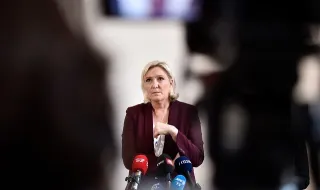
Talks between European Union leaders on the bloc’s budget for 2028-2034 collapsed after disagreements among member states proved deeper than expected, Reuters reports.
Although no breakthrough had been expected, differences among the 27 countries were so serious that the meeting was ended early. The leaders abandoned the second day of talks, initially scheduled for today, as they were unwilling to make compromises.
Most of them had hoped to reach a legally binding agreement before the end of the year — and well ahead of France’s presidential election in April-May 2027, which could bring far-right leader Marine Le Pen to power. Attention is now turning to the decisive round of talks scheduled for December 17-18, when negotiators will have to make up for lost ground.
How large is the EU budget and where does the money come from?
The latest proposal, already reduced from the initial 2025 version, provides for a seven-year budget of €1.582 trillion.
Two-thirds of the budget is provided through contributions from member states, calculated on the basis of each country’s gross national income. That is why governments are fighting tooth and nail to minimize their net contributions.
The budget also receives funds from the following sources:
75% of all customs duties on imports from non-EU countries, collected by member states. 0.3% of each country’s value-added tax (VAT) revenue, calculated on the basis of a harmonized tax base so that contributions remain comparable despite the different VAT rates in individual countries. A fee of €0.80 per kilogram (€800 per tonne) of non-recycled plastic packaging waste generated in each country. Fines for violations of competition law, contributions from non-EU countries for certain European programs, and taxes on the salaries of EU employees.To increase revenue and reduce national contributions, EU governments are considering adding revenue from the following sources to the Union’s budget: a digital services tax targeting large companies; the Carbon Border Adjustment Mechanism; non-recycled electronic waste; tobacco products; and the Emissions Trading System for carbon dioxide.
What are Le Pen’s plans for French contributions if she wins the presidential election?
The prospect of Marine Le Pen becoming president of France is prompting EU countries to reconsider their positions, as she has promised to limit French contributions to the EU budget to €5 billion a year.
France is the second-largest net contributor to the Union’s budget after Germany. Its gross contributions amount to between €21 billion and €31 billion annually, while its net contributions are around €9 billion. It is unclear whether Le Pen’s proposed €5 billion cap refers to gross or net contributions.
Le Pen also said that if she wins the election, France will end its financial support for Ukraine in its fight against the Russian invasion. This would place a greater burden on the other EU countries that want to continue helping Kyiv.
How could Le Pen thwart the process?
Since the EU budget must be approved unanimously, a single veto is enough to derail the entire process. If a legally binding agreement is not reached before Le Pen takes office, she could veto it and thus return all 27 countries to square one.
In addition, the financing agreement, called the “Own Resources Decision”, must be ratified by most national parliaments, including the French parliament. If EU governments reach a budget agreement before France’s April-May election but it has not yet been ratified by the French parliament, the agreement will not be legally binding and could fall apart.
What are EU member states arguing about?
Budget size: Net contributors to the budget and net recipients of funds are seriously at odds over its overall size. Contributor countries want the budget to be significantly smaller, while recipient countries insist that it should grow.
Rebates: Net contributors are also demanding additional rebates to reduce the amounts they pay into the common EU budget. This would make it more difficult to fund priorities such as security and defense, competitiveness, climate policies, agriculture, and support for poorer regions.
What the money should be spent on: Another major point of disagreement is how the money should be allocated. To this day, most funds go toward supporting farmers and fishermen, as well as raising living standards in poorer regions. These policies have dominated the budget for decades.
Some countries want the funds redirected toward research, innovation, and new technologies in order to strengthen the EU’s competitiveness against rivals such as China and the United States.
How is the budget approved?
The budget must be approved unanimously by the governments of all 27 EU member states, after which it must be agreed jointly with the European Parliament.
The “Own Resources Decision”, which covers all sources of funding, must then be ratified by the national parliaments.
How is funding for Ukraine linked to the EU budget?
Last year, the EU agreed to provide Ukraine with a €90 billion loan for 2026-2027. All member states except Hungary, Slovakia, and the Czech Republic agreed that the funds should be raised through a common loan backed by the EU budget. However, this mechanism also required unanimous approval, including from the three countries that did not support it.
A new €45 billion loan for 2027 must be secured in the same way, but this time Germany and other countries are insisting that all 27 member states participate in the mechanism. Germany says that otherwise it will not approve the EU budget for 2028-2034.
The EU has also earmarked €100 billion for Ukraine in its budget for 2028-2034. This amount, however, is unlikely to be sufficient. According to representatives of the European institutions, interest alone on the loans already granted to Ukraine by the EU — which will also be paid by the Union — will total between €55 billion and €65 billion during this period.
Financing the loans to Ukraine and paying the interest on them represent a serious challenge for governments that are already struggling because of high levels of public debt and voters’ dissatisfaction with the rising cost of living.
Source: news.bg