After Shenzhen, where the three geopolitical players—Xi Jinping, Trump and Putin—met, the world suddenly realized that the balance of power on the international stage had been reshaped, that the initiatives of developing countries were gaining strength and that this dynamic had begun to become institutionalized at various levels. The withdrawal of the United States from Afghanistan and then from Iraq, for example, is not only one of the important signs of this transformation, but also clearly points to the direction of change in the balance of power in the world. It is precisely this process, under conditions of weakened hegemony, that creates an opportunity for the countries of this region to reshape their state structures, security systems and economic relations to their own advantage. It is evident that the will to strengthen nation-states and restore state authority within the countries themselves is growing. Analyses indicate that this involves breaking up the fragmented order shaped by American interventions and restoring national sovereignty.
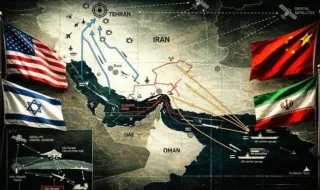
This is happening against the backdrop of the United States’ main dilemma involving its economic problems. It was also clearly reflected in their slogan, “Make America Great Again.” So they are no longer a great power, but will become one again? That is why they sat down at the table as equals with China and Russia. The new world order was adopted in Shenzhen, although it was not signed, but its psychological acceptance is complete. They say that the United States is at a “dead end.” The country’s enormous public debt and the impossibility of reducing it are well known. This is a problem, as is the continuous increase in interest payments on it. Something like a trap. But where, then, does economic power come from? In the last century, power undoubtedly came from production, while today it comes from their currency. It is the world’s reserve currency. That is why it is said that the United States derives all its prosperity and economic dominance from the global use of the US dollar. The loss of this power would be fatal for Washington. It is no coincidence that the BRICS countries are experimenting with ideas for introducing their own currency, which would undoubtedly be a blow to the dollar. If it succeeds. Until then, the United States will continue to frighten the whole world, and solely thanks to the dollar. It is also the foundation of their military power. And this is precisely where the delicate balance is formed. All of Washington’s policies aim to ensure that the dollar remains the undisputed currency, including through a high level of public debt, the cost of that debt, inflation and so on. Whatever is done, Washington must not allow or cause an unstable currency. Some analysts point out that “this is the force that stopped the attacks on Iran.” Because Tehran has precisely identified the weakest point and has pressured the United States exactly there. This is its inability to withstand rising oil prices. Public debt is increasing, its cost is undermining confidence in the dollar, inflation cannot be brought down and is rising, threatening demand for the dollar and everything connected with the dollar. That is why the Strait of Hormuz problem emerged as a basis for raising oil prices. The United States is forced to raise interest rates in order to reduce inflation, and this increases public borrowing. An unsustainable dilemma in a losing situation. Investors around the world always act in their own interests. Sometimes in such cases, one must remain merely an observer rather than an active participant in certain events. You are informed, but it is preferable to stay on the sidelines. Or only intelligence should be active.
As in that case involving the attack on Russian ships in the port of Benghazi in Libya. Zelensky took responsibility for the attack, but the Italian Senate raised the question of which allied intelligence services had supported it and reacted sharply to Kyiv’s actions in the Mediterranean. They had expanded the war beyond their own territory, right under Rome’s nose. In the territory of a former Italian colony that is a valuable supplier of oil and gas to Italy. Who monitored the location and movement of the Russian ships in Benghazi, what was the role of British military bases in Cyprus, what was an electronic intelligence aircraft working for the US military doing immediately before the attack off the Libyan coast, and which allies knew about the attack? The United States had allegedly only been informed, Paris was rubbing its hands with satisfaction over the Russians being driven out of Africa, but London remained the main suspect. Even as the Russians searched for a ship flying the Ukrainian flag that had the capability to launch unmanned underwater vehicles produced by a company based in London. A company whose board includes the Kingdom’s former defense minister, Wallace, former Supreme Allied Commander Europe, General Cavoli, and former Ukrainian prime minister Honcharuk, and which had access to 700 million in financial resources as investments from England’s National Wealth Fund. The United States is not in the spotlight, but it is aware. Moscow is aware too, but it is said of Moscow that “it always comes back for what is its own.” A quote from Bismarck. And Meloni will have to do more than talk to Zelensky and warn that she will reconsider the size of aid to Kyiv; she will also have to decide whether, in the future, she will allow Ukraine’s ambassador, together with the military attaché, to speak with Italy’s foreign minister in an imprecise tone and with bombastic statements. They had been summoned to receive a protest over the attack in Benghazi. As they say, appetite comes with eating, and Kyiv has clearly grown quite well-fed.
At the same time, WSJ, The Wall Street Journal, writes that “Marx’s ideas are once again on the European political agenda.” The reason, it says, is the rising cost of living and economic uncertainty in Europe. That is why the ideas of Karl Marx are being discussed again. According to WSJ, the concepts of nationalization, price controls and class struggle have not been cast into the past, but are once again in fashion. It is apparently a reaction by left-wing political formations to the rise of right-wing parties. This clearly does not apply to Spain. Precisely because of the impact of the economic crisis in leading European countries, concepts such as nationalization, state intervention in prices, confiscation of property and even class struggle are being discussed more and more often. They are even being considered by centrist parties and environmental organizations. Above all, this concerns a more active role for the state in the economy, regulation of markets and increased public intervention in meeting basic needs and so on. Are these ideas merely a reaction against right-wing parties, or are objective reasons behind them? There is no way that rising living costs, declining living standards and economic instability would not pave the way for discussion of proposals that until recently were considered marginal in broad political circles. It is interesting to see what Bulgaria’s opposition, zigzagging from the right through the center and all the way to the left, will say. The shift toward policies in which the state is a central participant, playing a more active role in shaping the economy and markets, is evident. The protests in the streets and squares by the citizens of Europe, predominantly young people, are part of these winds of change. There are calls for state intervention in economic processes, instead of leaving markets to their fate. In our country, the state is increasingly being sought when problems overwhelm the population relentlessly. It may seem strange, but crises, wars, problems unresolved for years and prices also lead to such unconventional ideas by today’s standards. Is this what lies ahead?