Author: Ivan Preobrazhensky
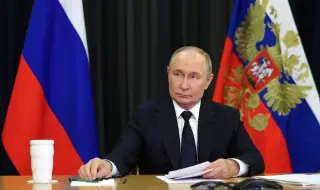
Russian President Vladimir Putin has personally made it clear that talking publicly about the onset of a recession in the Russian economy is forbidden. His dispute with the head of Sberbank German Gref, the Minister of Economic Development Maxim Reshetnikov, and representatives of big business in early September outlined the boundaries that are not allowed to be crossed for the time being. Talking about a “soft landing” of the economy is possible, but any talk of “stagnation” can lead to punishment, just like anything else. As in the case of “war” and “special military operation” - the Russian authorities are trying not to allow any panic.
Who is right - Gref or Nabiullina?
From a purely economic point of view, the dispute is about what the interest rate for refinancing loans from the Central Bank should be, which its head Elvira Nabiullina decided to lower, which was insisted on by state corporations and oligarchic business. The question is by how much.
Sberbank Chairman Gref says that a reduction of up to 14% is planned, but a larger one is needed - at least up to 12% - in order to make loans cheaper and the economy recover. Putin replies that this will lead to panic and instability due to the inevitable sharp rise in inflation and advises to have confidence in the Central Bank.
In other words, the dispute here is purely political, and the economy, as usual in recent years in Russia, remains in the background. It simply needs to "adapt" to Putin's plans. And these plans remain unchanged and are called "war until the complete surrender of Ukraine". Already, US President Donald Trump is talking about some kind of second stage of sanctions against Russia, because Vladimir Putin openly abandoned the idea of negotiations with Ukraine this year and clearly has a desire to fight more.
A situation like in 1917?
And for war, he needs not only a working military-industrial complex, but also an obedient society as a whole. It certainly wants this war to end as soon as possible, as is evident from all the sociological surveys on the subject. Although the accuracy of the figures in them cannot be trusted, they still show the trend in people's thinking. If the growing desire for peace is added to the expectations of inevitable economic collapse, the mood will be approximately the same as during the Russian Empire in 1917, and Putin does not want anything like that at all. Therefore, he orders the technocrats to continue their disputes in meetings, behind closed doors, and not to worry the psychologically unstable business and the population.
And if the technocrats do not shut up, what will happen? The Kremlin is clearly intensifying repression against society, limiting its access to information, banning communication in messenger and other online short message platforms that foreigners or emigrants can use to communicate with their relatives in Russia. A redistribution of property is also underway - with numerous formal anti-corruption arrests. Will they come for the technocrats now too?
Is Putin denying reality?
Meanwhile, experts believe that the difficulties of the Russian economy are objective. It may not be heading for a catastrophe and may even recover from the recession, but the “military” growth model has definitely run out: the military-industrial complex is no longer able to pull the rest of the economy forward. And the loans it is granted place a huge burden on the banking system.
It turns out that Putin is now denying reality and demanding the same from the technocrats. And here two challenges arise - one obvious, and one secondary, but more important. The first is who is right - Putin or the technocrats? Will the economy recover if, say, metallurgy collapses, as in the 1990s? There is still no clear answer, but this challenge gives rise to the second one - and it is precisely this that Putin is trying to cover up with silence. This is the fear of collapse, which is now evident from the statements of people close to power, who hope that this proximity will protect them from repression.
Fear is not only at the top
But this fear is not only at the top. It also penetrates the lower strata of society. As is known from Bulgakov's catchphrase, the destruction begins in the heads and then cannot be stopped.
Along with the already mentioned desire to end the war, all this may turn into a strong disappointment from excessively high expectations. Because society will inevitably switch from the strategy of profits from the war, which many Russians adopted in 2022-2023, to a strategy of survival and provision in the event of collapse. And such a strategy in itself is already a step towards collapse.
And it is important to know that such sentiments are rather fueled by repression than slowed down. So it is not excluded that the Russian authorities will have to change not only the exhausted economic growth model, but also to invent a new model for stabilizing society. If they are even able to think and act adequately.