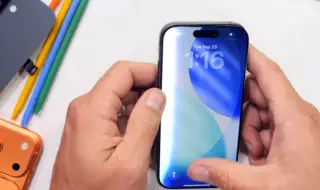
The tech world is once again excited after popular blogger Zach Nelson, known for his ruthless durability tests, subjected the latest iPhone 17 to a "surgical" procedure. The goal of this detailed teardown was to assess the internal architecture of Apple's flagship and, alas, Nelson quickly identified a serious design risk that could turn any repair attempt into a nightmare.
One wrong move and it's over
The teardown process, which began with removing the back panel using hot air (a hair dryer) and isopropyl alcohol, seemed standard. But the real problem arose when removing the display.
After dealing with the back panel (which hides the ribbon cable connecting the motherboard to the MagSafe coil), Nelson moved on to the front screen. To separate the display from the case, he again resorted to heating and alcohol to soften the glue. This is where the insidious trap lies.
The blogger inadvertently damaged the display's ribbon cable, which instantly "killed" the image. Nelson explicitly warned that when opening, one must work with extreme jeweler's precision. His warning is more than clear: the spudger should not be pushed too deep into the glue around the perimeter of the screen. Instead of abruptly opening, the display should be lifted carefully, like a book, to avoid fatally severing the sensitive cable. This design effectively makes opening the iPhone 17 for the first time extremely risky, even for experienced technicians.
Internals and missing spare parts
After overcoming the "display crisis", the remaining steps were rather routine. The battery was removed using Apple's signature "electric lock". Then came the cameras, speakers, vibration motor, SIM slot cover, and finally - the motherboard.
But Nelson raised another important issue that directly affects the right to repair. He pointed out that Apple does not list USB ports as separate spare parts on its website. This means that if the port on the new iPhone gets damaged (which is a common problem with prolonged use), repair can be seriously difficult or even impossible for unauthorized repair shops and end users.
In conclusion, despite the internal improvements, the iPhone 17 raises serious questions about its repairability, especially when initially opening the display, which hides a hidden and easily damaged ribbon cable. See also the video.