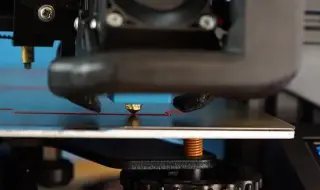
When American farmers were forced to throw away millions of liters of milk during the pandemic due to a supply disruption, a team from the University of Wisconsin-Platteville saw this white river not just as waste, but as a resource. Led by John Obielodane and Dr. Joseph Wu, the researchers managed to do something almost alchemical: they turned the spoiled raw material into an innovative composite material for 3D printing.
At the heart of this breakthrough is a complex process of extracting the main milk components – casein and whey. After years of precise laboratory experiments, scientists found the ideal “recipe”, combining these proteins with existing polymers. The result? A filament that is strong enough to replace traditional plastics, yet gentle enough on hardware to not clog nozzles on standard printers.
The biggest pain point of modern 3D printing is its heavy dependence on fossil fuels. Most of the parts that come out of today's machines are practically eternal and non-degradable. "Milky filament," however, offers a radically different scenario. Because it is based on bio-waste, it is biodegradable, which solves one of the industry's biggest environmental conundrums.
If this technology leaves the lab and hits the market, it will kill two birds with one stone:
For nature: Drastic reduction in plastic pollution.
For the economy: A new source of income for farmers who have been losing money on unsold produce.
For industry: Full compatibility with current equipment, without the need for expensive upgrades.
In a world desperately searching for sustainable solutions, turning yogurt into an engineering component sounds more like ingenious pragmatism than science fiction.