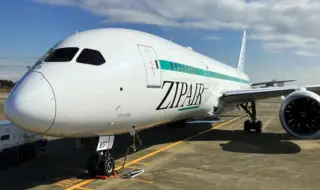
Imagine a huge Boeing 787 gliding through the air with the same ease with which a shark plows through ocean waves. This is no longer science fiction, but reality at Narita Airport. The Japan Aerospace Exploration Agency (JAXA), in partnership with Japan Airlines (JAL) and Zipair, has successfully transferred one of nature's most effective defenses to the fuselage of a passenger plane.
Biomimicry in action: What is “shark skin“?
The secret lies in the so-called riblets - microscopic longitudinal grooves that mimic the relief of shark skin. These “furrows“ are not just for decoration; they have a critical job:
Break turbulence: Reduce chaotic vortices in the boundary layer of air that surrounds the plane.
Minimize drag: Less friction means less energy to move.
The numbers that change the game
The Japanese don't just experiment - they measure success in tons. The first tests on JAL's Boeing 787-9 have already yielded impressive results. On the Narita-Frankfurt route alone, savings of 154 tons of aviation fuel per year are expected. This means 492 tons less CO₂ emissions into the atmosphere.
Wow! And that's just the beginning. Scientists are already working on an even sharper coating profile (resembling a knife blade), which promises to reduce aerodynamic drag by up to 6.5%.
The “Paint on Paint“ Technology
On January 28, 2026, it was announced that Zipair had put its first aircraft with such a coating into regular service. The key here is the application method. Instead of heavy and complex panels, JAXA uses an innovative technology to directly apply the texture to the existing paint of the fuselage.
Lightweight: The coating adds almost no weight.
Durability: Designed to withstand extreme temperatures and high speeds.
The path to zero emissions by 2050
Aviation is one of the sectors that is most difficult to decarbonize. Electric aircraft are still a long way from transoceanic flights, so “shark skin“ is the bridge to the future. If the technology is implemented on a large scale, the environmental footprint of global aviation could shrink dramatically without requiring changes to engines or fuels.