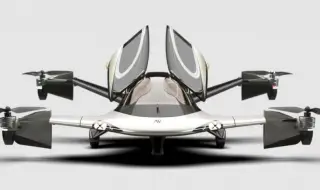
London's technology sector is literally preparing for take-off, after the startup AltoVolo announced the start of work on the full-scale prototype of its ambitious project Sigma. After the reduced 1:4 scale copy successfully passed all the tests in the sky, the engineers are ready to breathe life into the real model. Sigma is not just another flying vehicle – its creators define it as the world's first hypersonic aircraft for vertical take-off and landing, which is one step away from official certification.
The most drastic change in the engineering concept comes after long hours in the laboratory: AltoVolo replaces encapsulated fans with open rotors. It turns out that the closed system was too heavy and cumbersome. With the new solution, the machine can now hover in the air twice as long, while also becoming more stable when tilted. To squeeze the most out of this configuration, the British have also developed their own propellers, which leave standard commercial solutions far behind in the ranking.
The numbers behind the Sigma sound like something out of a futuristic movie. The two-seater machine relies on a hybrid electric system that allows for journeys of up to 800 km at a solid speed of 355 km/h. Although it weighs under a ton, the device is designed to be extremely tough and safe. In case of an accident, there is a ballistic parachute on board, and the backup engine system ensures that the flight will continue even if one unit decides to "retire" prematurely. In this case, the noise is as much as 80% lower than that of a conventional helicopter - a real boon for urban neighborhoods.
Interestingly, to sit behind the wheel, you don't have to be an ace in the air force. The professional equipment is combined with an interface accessible to amateurs, who can get a license after only 25 hours of training. Of course, there will be restrictions for the new recruits – flying only in clear weather and during the day.
If all goes according to plan, by the end of 2026 we will see the finished demonstration model, which will open the doors to serial production. Experts are already rubbing their hands, calling Sigma “the first real flying car”. One thing is certain – the urban landscape is about to change radically, and much sooner than we thought.