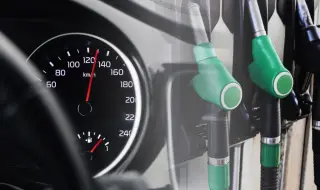
Achieving maximum fuel efficiency while on the road often turns out to be an easily solved task, as long as the driver adjusts some of his permanently established habits. The key to saving precious drops from the tank lies in a smooth and predictable driving style. Sharp starts and aggressive acceleration put unnecessary strain on the drive system, while the subsequent forced braking simply turns valuable kinetic energy into useless heat on the brake pads. A calm pace and moderate pedaling guarantee far more reasonable consumption.
Maintaining a constant speed of around 90 km/h is the optimal balance for most modern vehicles, since in this range the aerodynamic resistance and the load on the engine are in perfect proportion. Drivers should aim to maintain engine speed between 1,500 and 2,000 rpm, which ensures high efficiency without unnecessary stress on the engine. Another serious factor is external resistance, which is often overlooked. Installing roof racks, crossbars or empty boxes disrupts the airflow around the passenger compartment and inevitably increases fuel consumption, which is why they should be removed as soon as they are done.
The widespread belief that turning off the air conditioning on hot days and opening the windows will save energy is actually a serious misconception. Removing the windows at higher speeds worsens the aerodynamics of the vehicle to such an extent that the resulting negative effect is completely comparable to the presence of a bulky roof rack. Additional consumers in the cabin, such as phone chargers, navigation systems and video recorders, also put a strain on the electrical system and the generator, but their real impact on consumption is negligible and amounts to only about a hundred milliliters for every hundred kilometers driven.
Modern technologies also completely eliminate the traditional long-term warming up of the engine on the spot during the warm season. Starting and immediately driving off at a moderate pace is the most correct approach, since in this way all components of the transmission and engine reach optimal operating temperature on the move and without unnecessary combustion on the spot. Ultimately, reasonable planning of maneuvers, smooth operation of gears and a relaxed journey remain the surest way to achieve real financial savings.