Future manned and robotic missions aimed at exploring the Moon face a serious engineering obstacle. In the polar latitudes of the satellite, there are relief zones where sunlight has not penetrated for billions of years. To overcome this problem, Chinese scientists have developed a concept for wireless transmission of electricity to lunar rovers and research probes using precisely directed laser beams.
The project architecture envisages the construction of specialized generator towers at the highest points around the South Pole, which enjoy almost constant sunlight. The energy collected by photovoltaic arrays will be transformed into powerful laser pulses directed directly to the equipment operating in the deep and seemingly impregnable shadowy depressions.
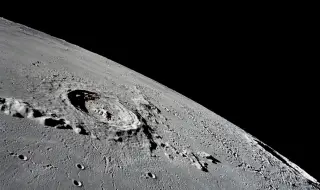
To confirm the effectiveness of the model, the researchers used topographic data from NASA orbiters, focusing on the strategically important Shackleton Crater. Simulations show that the optimal positioning of the power facilities increases the useful coverage by more than 35 percent, while allowing stable energy transfer over a distance of about 5 kilometers.
The development of such a wireless infrastructure eliminates the need for the rover itself to carry heavy and bulky rechargeable batteries, which significantly increases their payload. The lighter vehicles open the way for the installation of additional scientific instruments, drilling equipment and analytical laboratories, which are crucial for the discovery of water ice.
In the longer term, such a power grid will form the basis of the planned International Lunar Research Station (ILRS). By providing an uninterrupted power source, Chinese engineers hope to ensure the autonomy of future habitable modules and turn the harshest and darkest corners of the Moon into a sustainable site for scientific activity.