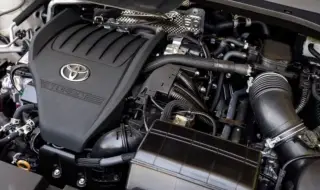
The fight against the so-called turbo lag is among the oldest and most complex engineering challenges in automotive history. In an effort to eliminate even the last microseconds of delay when pressing the accelerator pedal, Toyota has developed an original method that reveals new potential in the architecture of hybrid power plants. The new patent application of the Japanese concern describes a circuit capable of preparing the turbocharger for full load even before the first working stroke in the cylinders.
The technical essence of the idea relies on intelligent interaction between the internal combustion engine and the electrical component. Instead of integrating a separate electric compressor, which would make the design heavier and more expensive to manufacture, the engineers use the already existing electric motor-generator from the hybrid system. When the relevant parameters are detected, the electric machine begins to rotate the crankshaft of the gasoline unit that is not yet activated. In this way, the piston group acts as an air pump - it sucks in atmospheric air and pumps it through the exhaust manifold to the hot turbocharger fin.
The central role in the whole process is played by the electronic control unit, which constantly analyzes the pressure in the intake tracts and the positions of the control valves. By monitoring the dynamic indicators and the driver's behavior, the control software predicts the need for maximum power and spins the turbine wheel in advance. At the moment when the fuel system injects fuel and gives a spark, the turbocharging system is already operating at optimal speeds and provides instant pressure.
In standard hybrids, the initial deceleration of the gasoline engine is compensated by the instantaneous torque of the traction electric motor. However, Toyota's mechanism is aimed at achieving extremely sharp response and maximum linearity of acceleration, which is critical for high-performance sports cars. Although the technology currently exists only on paper, it shows that the potential for optimization of the classic internal combustion engine is far from exhausted.