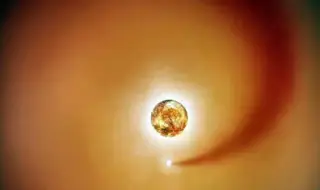
The mystery surrounding the variable brightness of one of the most famous stars in the night sky - Betelgeuse in the constellation Orion - is finally about to be finally solved. Astronomers have captured the clearest and most detailed image yet of its invisible companion. The mysterious object, provisionally named Betelgeuse B (or Sivarha, which translates from Arabic as “bracelet”), was detected thanks to the high-precision SPHERE instrument installed on the Very Large Telescope (VLT) in the Chilean Atacama Desert.
The idea that the giant star is not alone in space has been circulating in scientific circles for decades, but all previous attempts to capture it have been drowned in light interference. The new data achieves exceptional statistical certainty, surpassing the threshold for scientific discovery. For now, the object still retains its official status as a candidate satellite, as scientists need to track its orbital trajectory from the other side of the giant during planned observations next year to confirm their gravitational binding.
The observations show that Betelgeuse B is located at a distance of about 8.8 astronomical units from its giant neighbor - a distance nearly nine times greater than that between the Earth and the Sun. With a mass between 2.6 and 3.1 solar masses, the new object turns out to be a young main sequence star, significantly heavier than initially theoretical calculations. It is its gravity that has "shaken" Betelgeuse, causing the secondary 6-year cycle of pulsations in its brightness.