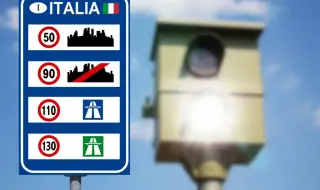
The news radically changes the way in which fast driving is sanctioned. The project envisages a reduction of administrative violations from the current 82 types to just 21, but the big news for drivers lies in the new mathematical model for calculating fines. The penalties will no longer be determined in general price steps, but will be accumulated with a fee for each individual kilometer per hour above the allowed threshold.
According to the prepared regulation, highway speeding is expected to be charged at a flat rate of 10 euros for each “excess” kilometer per hour. In urban conditions, the tariff varies between 5 and 10 euros depending on the dynamics and potential danger. A simple calculation shows that driving 17 km/h above the limit on the autobahn will theoretically cost the driver 170 euros. The final methodology is still being refined by experts, so the calculated amounts are indicative. A similar strict scheme, charging each kilometer separately, is already operating successfully in Estonia at a price of 7 euros per kilometer.
However, the financial penalty is only one side of the coin. The package of changes provides for a serious tightening of measures against systematic violators through an updated scale of checkpoints, which will be removed in steps of 4, 6 or 8. For exceeding the speed limit by more than 20 km/h on a highway or 40 km/h in a built-up area, a temporary withdrawal of the driver's license is also introduced. The new rules will also apply in full force to foreign motorists transiting through the country.
Along with the stricter restrictions, the draft law also offers some flexible solutions to ease traffic. Under precisely defined conditions, overtaking on the right on roads with more than two lanes may be permitted, and motorcyclists in stuck traffic will be allowed to use the shoulder at a limited speed. The attractive 30% discount for voluntary payment of the fine within 5 days is also maintained, and indexation to inflation will only be triggered if consumer prices rise by more than 5%.
All these amendments are currently in draft form. Public consultations are open until September 13, 2026, after which the transport department in Rome will submit the final document for voting.