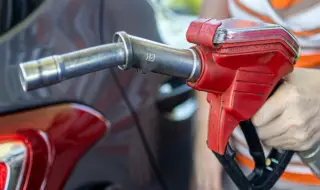
For decades, the sound of the advance detonation of fuel in the cylinders was the main enemy of engineers, and the solution seemed almost magical. Adding tetraethyl lead to fuel mixtures managed to increase the octane number in a matter of seconds and ensure smooth operation of engines with a high degree of compression. For almost a century, this chemical compound with the formula Pb(C₂H₅)₄ ruled the columns in Europe and the world, becoming a standard for the automotive industry since the 1920s. However, few realized that behind the improved dynamics of power units was a highly toxic component that slowly poisoned the air in cities and caused immeasurable damage to human health.
The change in attitudes came with the introduction of stricter environmental standards and the technical evolution of the cars themselves. Lead turned out to be fully compatible with classic cast iron blocks, but disastrous for modern ecological systems. With the advent of the first catalytic converters and lambda probes, it became clear that tetraethyl lead instantly and irreversibly poisons and disables them. It is for this reason that the European Union took decisive steps to finally phase it out in the 1990s, and in Bulgaria its sale at gas stations was finally discontinued at the beginning of the new century. Worldwide, the last drop of leaded gasoline for mass transport was officially filled in 2021, putting an end to this dangerous technological period.
Today, advanced refineries on the Old Continent rely on radically different, safe methods to achieve a high octane number. Through processes such as catalytic reforming, isomerization and the addition of environmentally friendly oxygenates such as MTBE and bioethanol, modern fuel achieves octane ratings of 95, 98 or even 100, without containing a single gram of heavy metals. Modern injection systems rely entirely on these clean fuels to guarantee low consumption and long component life.
The differences between the two types of fuel are fundamental and cover both the chemistry and their impact on internal combustion:
In leaded gasoline, the octane number was artificially increased by the toxic additive, which led to the deposition of heavy compounds in the exhaust system, the destruction of catalysts and the release of carcinogenic emissions. In the past, specific coloring was used to distinguish fuels – blue, red or orange, but the color was never a completely reliable indicator.
In unleaded gasoline, the high resistance to detonation is achieved through organic compounds that are completely harmless to catalytic converters and oxygen sensors. Today's fuels available at Bulgarian gas stations are transparent or slightly yellowish and meet the strict European standard EN 228.
If someone today tried to pour such outdated fuel into a model car, the consequences for the wallet would be disastrous. Even a single fill-up is capable of destroying the catalytic converter and oxygen sensors, and the replacement or restoration of these components in service stations in Europe and Bulgaria can quickly exceed amounts from 300 to over 1000 euros. The only sure way to confirm the absence of lead impurities in suspicious samples remains specialized laboratory analysis, the price of which usually varies between 30 and 100 euros.
Ultimately, the complete ban on leaded gasoline remains one of the most important victories for the environment and public health in the history of the transport sector. Today, the automotive world is fully oriented towards cleaner technologies, and the memory of tetraethyl lead remains only in automotive history textbooks.