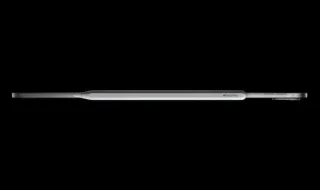
On the eve of Apple's long-awaited September event, details about one of the most interesting behind-the-scenes developments of the Cupertino technology giant have surfaced in the media space. According to information from the famous journalist Mark Gurman from Bloomberg, the company's engineers have created a working prototype and conducted serious internal tests of a special stylus designed for the brand's first foldable smartphone - the expected iPhone Ultra. In the end, however, the project for the new accessory was frozen and the chance that it will see the light of day at the upcoming premiere is minimal.
The design of the tested Apple Pencil was significantly shortened compared to the known modifications for the iPad, to match the more compact dimensions of the foldable body. The idea for storage and charging relied on the well-known magnetic connection to the side frame of the smartphone. However, this solution turned out to be the first major obstacle during tests in a real environment. The stylus fixed on the board interfered with the natural grip and created serious inconvenience every time the flexible display was opened, forcing the user to remove it even when he did not intend to use it.
The second and far more critical problem lies in the physical limitations of the flexible screen itself. The foldable inner panels use a much softer and more delicate protective layer compared to the traditional hardened glass in standard smartphones. Long-term tests have shown that the hard tip of the stylus leaves visible marks and fingerprints on the surface – a risk factor that Apple cannot afford with a top-of-the-line flagship model.
The rejection of the accessory also unofficially overlaps with Steve Jobs' famous philosophy, expressed back when the original iPhone debuted in 2007, when he rejected the need for such pens to control a smartphone. Although styluses have gained immense popularity with iPad tablets, the accumulation of technical obstacles and ergonomic compromises with the iPhone Ultra leads to the logical decision for Apple to take a slow step.