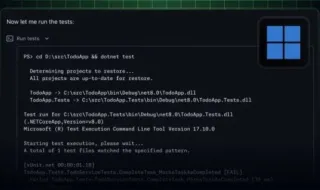
The era of manually writing software code on a keyboard is gradually becoming a thing of the past. Software development has entered a new stage, in which artificial intelligence takes over a significant part of standard and monotonous tasks, transforming from a simple helper tool for automatic completion into a standalone agent. The human role in this process is rapidly shifting to designing system architectures, optimizing performance and controlling the final results.
This radical assessment comes from David Fowler, a leading engineer at Microsoft with 18 years of experience at the company, known as the co-founder of SignalR, a key figure in .NET and current project manager of the .NET Aspire. In his post on the social network X, he stated categorically: “Handwriting code is absolutely over.“
Fowler's message does not mean the end of the software engineering profession, but a fundamental change in its scope. Advanced autonomous agents in development platforms can now independently generate templates, run tests and correct errors. However, the value of human expertise is increasing in areas such as hardware integration, working with native APIs, optimizing performance and rigorous security verification. Since solutions generated by artificial intelligence are not error-free, a thorough review of the code base remains mandatory.
Microsoft itself has long applied this approach in its internal processes. According to official data, between 20% and 30% of the software giant's internal code is already created by neural networks. AI agents are actively used for vulnerability analysis, patching, and maintaining key system components in environments like Windows 11 and Azure.